


For the past 10 years, we’ve frequently third party lab tested our cacao for heavy metals and mold toxins. We strive to offer you the cleanest product possible, and to share transparently with you the best info we have so you can make informed choices about your own health.
How does Ora Cacao test for heavy metals?
In 2025, we switched third party labs to Purity Labs to increase the minimum resolution of our heavy metals test. Our new resolution limit is 5ppb (parts per billion) for Lead and Cadmium. This is a twenty fold improvement in resolution over previous testing. While there are many metals out there to test for, lead and cadmium are the primary metals of concern in cacao where we have known science to back up the impacts. Here we'll share and discuss our results, linked above in the first sentence.
DOES ORA CACAO HAVE LEAD?
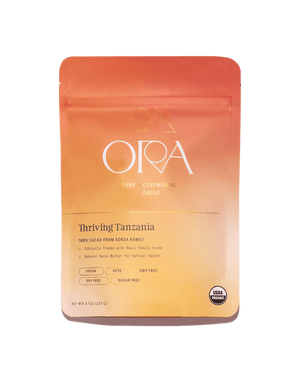
Our pure cacaos are very clean where lead is concerned. Especially our Boundless Belize, Thriving Tanzania, and Illuminating India have extraordinarily low results (less than 5ppb, 7ppb, 11ppb respectively). Just for context, the resolution limit on commercially available testing for lead is 5ppb, so we're seeing results right at the threshold of what is even detectable. For further context, the current California legal framework (which is more stringent than federal standards) allows up to 225ppb lead content for cacao 95% or darker, so we are very very far below this threshold.
Lead is a problem in many other cacaos. We've achieved these extremely low values due to our remote sourcing and our stringent post harvest controls, avoiding contamination from airborne and ground based lead dust prevalent in many cacao growing regions, primarily from leaded fuel combustion and to a lesser extend from leaded paints.
These extraordinarily low levels are also evidence of our manufacturing best practices effectively eliminating any contribution from our equipment on metals levels. Some people make unsubstantiated claims that chocolate making machines add heavy metals to cacao, and these lead test results are strong evidence to the contrary.
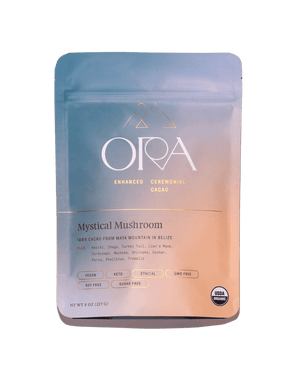
As areas for improvement, we hope to expand our post harvest protocols to our Uplifting Ugandan cacao to further reduce lead levels there (most recently 19ppb), and to measure lead levels in our Connected Colombia and Glowing Guatemala cacao when they come back in stock. With higher resolution testing we also learned in November 2025 that our Vibrant Vitality and Oaxacan Spice cacaos have notably higher lead values (48ppb and 74ppb, respectively) compared to our pure cacaos, which is actually the result of the certain secondary ingredients, like cinnamon and maca root, which are more prone to picking up lead than cacao does. While these levels are common for these ingredients and considered safe, we’ll be putting more focus into our secondary ingredient sourcing to find the lowest lead sources of those ingredients in an attempt to reduce these levels.
-

Lead Hazard - Cacao Beans Drying On Ground Near Road with No Roof in Cote d'Ivoire (not ORA)
-

Lead Safe - Cacao Beans on Raised and Covered Drying Beds in Belize (ORA)


DOES ORA CACAO HAVE CADMIUM?
As for cadmium, there’s no escaping it in our food system, and our cacao like all chocolate has it too, primarily absorbed from soil where the cacao trees grow. Cadmium in soils is both naturally occurring but also contributed to by phosphate fertilizers which are used worldwide, even for organic crops. Uptake of cadmium into cacao trees is mediated by numerous factors such as soil health, tree age, and cacao genotype. Remediation of soils to reduce cadmium levels is likely to be a multi-generational effort. Most adults have low grade cadmium exposure from a variety of dietary sources, cacao being just a small part of the overall picture.
In the graph below you can see how one serving of Ora Cacao has comparable cadmium to a serving of potatoes, rice, or bread. Cacao has a higher concentration of cadmium than many other foods, however you also eat a lot less of it, so when you multiply concentration by daily serving amount, you get the graph below, and you can see the focus on cacao is misplaced. Drinking a cup of cacao on the regular is not substantially different to eating a meal with potatoes, rice, or bread. Overall, research shows the primary dietary sources of cadmium are bread, cereals, potatoes, and leafy vegetables — cacao is a comparatively small contributor to total dietary exposure.
We cannot underscore how important it is to understand the difference of concentration (in ppb) vs. daily exposure (in ug/day). Daily exposure is concentration multiplied by the quantity (in grams) consumed daily. We have had many concerned individuals approach us who have self educated using chat GPT, quoting action levels of 5 ppb for cadmium. This is the U.S. EPA's Maximum Contaminant Level for drinking water. Because the entire population drinks about a gallon of water daily, the concentration (ppb) needs to be much lower to limit daily exposure (ug/day). There is no such thing as cacao with a cadmium concentration below 5ppb, and we also we don't need such a low spec, because we're not drinking a gallon of cacao per day.
The takeaway is concentration and quantity consumed daily go together to give you daily exposure, which is ultimately what matters in the body. You can't use these numbers in isolation because they are meaningless on their own. The U.S. EPA MCL is designed for water, not cacao! Other values have been established for cacao, currently in California 960ppb for cadmium in cacao 95% and darker.
While our east African cacaos have lower cadmium values than our central and south American cacaos due to natural soil differences, instead of optimizing which cacao we drink based solely on cadmium levels, which is rather reductionist, we embrace a dietary strategy to protect against lead and cadmium uptake. It turns out, not all the cadmium in our foods is absorbed into our body, due to protective minerals, vitamins, and other common foods.


A Dietary Resilience Strategy to Protect Yourself
Even if you chose to not eat any chocolate at all to protect yourself from heavy metals, the truth is you'd still be getting substantial exposure from many other common foods, as we saw in the graph above. We recommend a dietary resilience strategy rather than an elimination strategy.
The good news is essential minerals like Iron, Zinc, Selenium, Magnesium, and Calcium reduce the absorption of cadmium in the body. With the exception of calcium, cacao has significant levels of all of these beneficial minerals, so cacao effectively already has built in protection against heavy metal uptake. For example our cacao contains 6% DV of iron and 8% DV of zinc - enough to reduce cadmium uptake in the first place.
How does this work? In the human digestive system, the body does not discern between beneficial minerals and toxic heavy metals. Effectively, all of these minerals and metals use the same "doors" to get absorbed, with transport proteins which pull minerals from food into your bloodstream.
When your body does not have enough essential minerals such as Iron or Zinc, it opens more of those doors to try to get them — and cadmium can enter more easily as a result. Unfortunately, this also means toxins like cadmium can enter more easily, since the body can’t fully distinguish between them, there can be a ten fold increase in cadmium absorption during mineral deficiency! When you get enough Iron and Zinc from food or supplements, your body keeps those doors “satisfied” — so fewer openings are available for cadmium.
Additionally, Iron and zinc also help your body safely store or remove cadmium. Iron supports healthy red blood cell production, which uses up the same storage proteins cadmium would otherwise occupy. Zinc helps your body make a protein called metallothionein, which binds to trace metals and keeps them from circulating freely or causing damage. Together, these minerals act like a nutritional shield — so cadmium has nowhere to settle and less chance to build up over time.
Beyond Iron and Zinc, dietary Vitamins B1, B6, C, and E are all being studied for their protective mechanisms against heavy metals. Several common foods are being studied for their protective effects on different body parts from heavy metals. These include: soybeans to protect the heart and arteries, garlic to protect the blood, kidneys, and brain, ginger and tomatoes to protect the kidneys, onions and grapes to protect the testis, and green tea to protect the liver. In a world where dietary cadmium exposure is a given regardless if we enjoy cacao or not, we are fortunate that some foods, minerals, and vitamins we eat counteract the effects of our exposure.
Is Ora Cacao safe during pregnancy?
During pregnancy, absolutely minimize lead exposure. Much more so than cacao, the biggest environmental hazard for most Americans is lead dust in older buildings which have lead paint. While now outlawed residentially, lead paint is still far more common than most people think, and it can still be used in commercial, marine, and aviation settings.
There isn’t one clear “safe” level of cadmium during pregnancy. Health authorities like the World Health Organization (WHO) and European Food Safety Authority (EFSA) have set general limits for lifetime cadmium exposure, but these were based mostly on kidney and bone effects in adults—not on pregnancy or fetal development. Scientists haven’t yet agreed on a pregnancy-specific safe daily intake, but it’s likely very low.
Scientists are still studying what very small, real-world dietary exposures mean for developing babies. Newer studies associate prenatal cadmium exposure with lower birth weights and possible effects on how hormones function, indicating cadmium can cross the placenta in some cases. However, these effects are usually seen at higher exposure levels or in populations with multiple heavy-metal exposures. Researchers can’t yet say whether the trace amounts found in commonly consumed foods like cacao, spinach, rice, or potatoes have meaningful impacts. Diet and nutrition make a big difference. People with adequate iron, zinc, and calcium absorb less cadmium from food. This is one reason the same diet can affect people differently—nutrition status and soil background matter a lot.
Closing Thoughts
We’re proud to share our Thriving Tanzania cacao, with a most recent test result of 7ppb lead and 105ppb cadmium, is one of the cleanest cacaos available on the market today (and we’ve looked at a lot of test results). Our Illuminating India cacao has a recent test result of 11ppb lead and 125ppb cadmium, also showing very low levels and making it a very good choice. If you have a known heavy metals sensitivity or are pregnant, these are our go to recommendations if you choose to have cacao. But beyond choosing our lowest heavy metal cacao, we cannot overemphasize how heavy metals exist within the dynamic ecosystem of our body and many other factors influence metals uptake and impact beyond merely the metals concentrations. This is why we recommend a dietary resiliency strategy emphasizing foods with protective effects from heavy metals, and overall, balanced lifestyle.
We want you to make the most informed decision possible around consumption of cacao and to know the facts and context for heavy metals in our food system. Our aim is to offer you clear, transparent information so you can make your own choices with the most up to date information.
References
- Cadmium Exposure: Mechanisms and Pathways of Toxicity. PMC 11209188
- Bioavailability as an issue in risk assessment and management of food cadmium. PubMed 18430461
- Dietary Cadmium Intake and Sources in the US. PMC 6356330
- Maternal Cadmium Exposure during Pregnancy and Size at Birth. PMC 3279440
- Associations of Prenatal Exposure to Cadmium With Child Growth. PMC 8045476
- Dietary Strategies for the Treatment of Cadmium and Lead Toxicity. PMC 4303853
Frequently Asked Questions
Does Ora Cacao contain lead?
Does Ora Cacao contain lead?
Does Ora Cacao contain cadmium?
Does Ora Cacao contain cadmium?
How does Ora Cacao test for heavy metals?
How does Ora Cacao test for heavy metals?
How do Ora Cacao's heavy metals levels compare to established food safety guidelines?
How do Ora Cacao's heavy metals levels compare to established food safety guidelines?
Does Ora Cacao test for mold toxins and mycotoxins?
Does Ora Cacao test for mold toxins and mycotoxins?
How do Ora Cacao's heavy metals levels compare to other foods?
How do Ora Cacao's heavy metals levels compare to other foods?
Which Ora Cacao product has the lowest heavy metals?
Which Ora Cacao product has the lowest heavy metals?
Is Ora Cacao safe?
Is Ora Cacao safe?
Is Ora Cacao safe during pregnancy?
Is Ora Cacao safe during pregnancy?