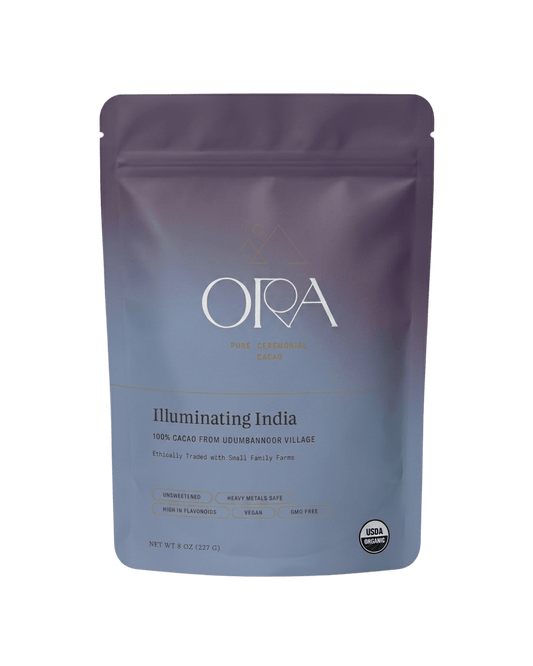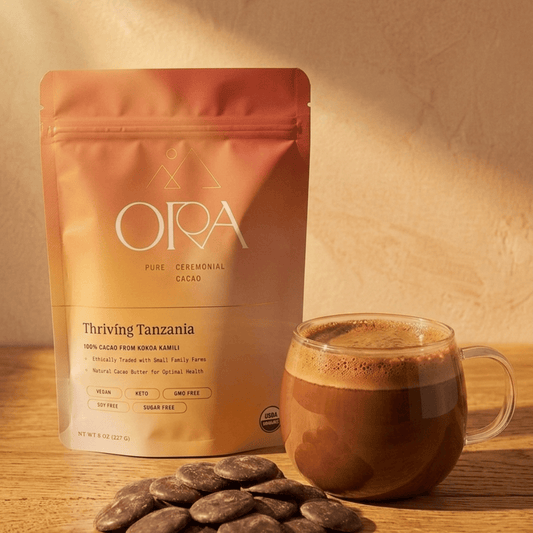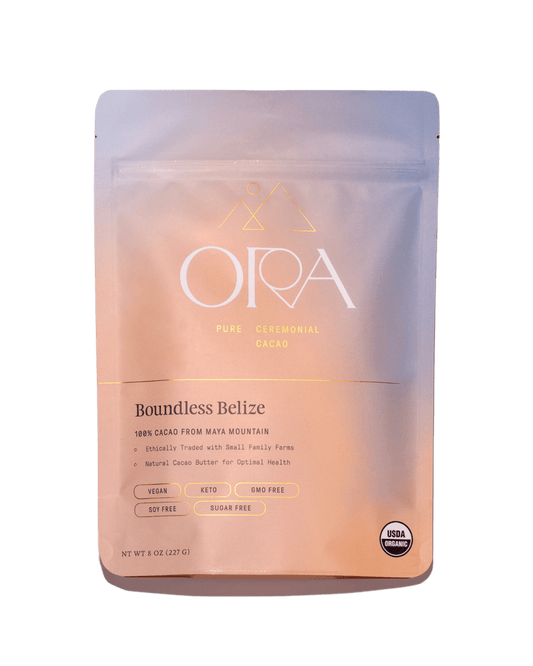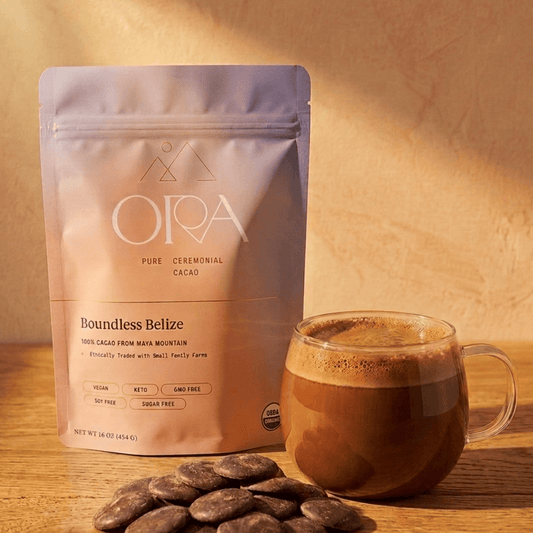




There has been a lot of conversation in recent years about heavy metals in chocolate. And you may be wondering how this impacts your morning cacao ritual. At Ora, we’ve always lab tested all of our cacao and shared the results. Last year, we invested in higher resolution testing at the part per billion (ppb) level to get an even more accurate read out to share with you. We’re happy to share that our cacao tests far below regulatory safety limits.
Keep reading to learn about why heavy metals are in cacao and what our newest testing reveals.
Shop Ceremonial Cacao
Our Latest Lead Testing Results

We regularly test our cacao for heavy metals so we can share clear and accurate information about what is in each cup. In 2025 we upgraded our third party testing to improve resolution to parts per billion (ppb), giving us a much more detailed view than before. This higher precision helps us better understand our results and share them transparently with you.
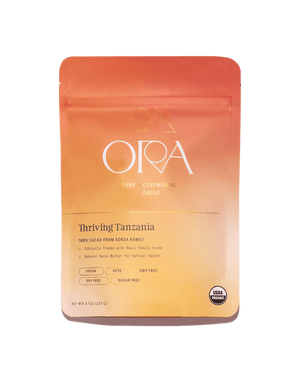
Our pure cacaos are very clean where lead is concerned. Boundless Belize measured below 5 ppb and Thriving Tanzania measured 7 ppb. Just for context, the resolution limit on commercially available testing for lead is 5 ppb, so results at that level are right at the threshold of what is even detectable.
To put these numbers in perspective, California currently allows up to 225 ppb lead in cacao that is 95% or darker. Our results are far below this level and reflect remote sourcing and careful post harvest drying practices that prevent contamination from airborne and ground based lead dust common in many cacao growing regions.
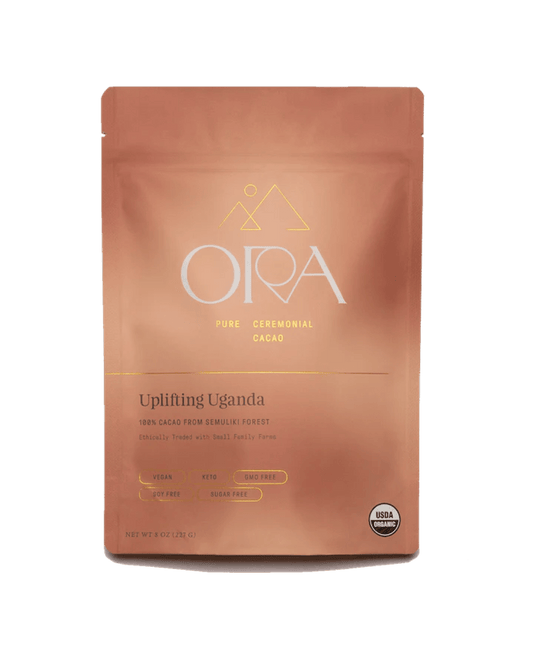
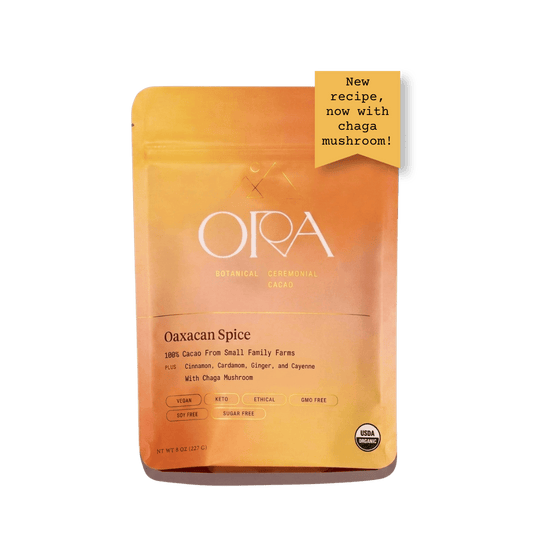
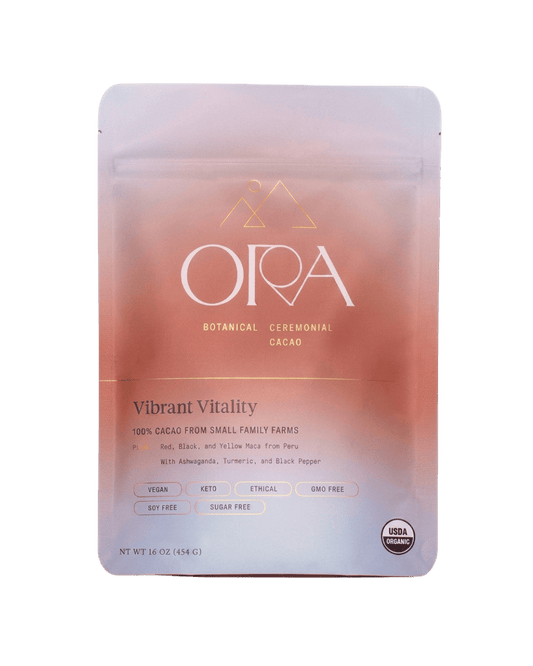
We also measured 19 ppb lead in Uplifting Ugandan cacao and are continuing to expand post harvest protocols there. Higher values in botanical blends such as Vibrant Vitality at 48 ppb and Oaxacan Spice at 74 ppb come primarily from secondary ingredients like cinnamon and maca root, which are more prone to accumulating lead than cacao itself. These levels are typical for those ingredients and considered safe, and we are continuing to refine sourcing to reduce them further.
Our Latest Cadmium Testing Results
Cadmium is absorbed by cacao trees from the soil compared to lead, which is introduced to beans as a post harvest contaminant.. Cadmium levels vary naturally depending on soil conditions, cacao genetics, and tree age, which is why East African cacao often measures lower than Central and South American cacao across the industry. For example, our Thriving Tanzania cacao most recently measured 105 ppb cadmium. For context, California has set a guideline of 960 ppb cadmium for cacao that is 95% or darker, making Thriving Tanzania about 9X safer than the limit.
Because cadmium is present throughout the food system, it is not something that can be eliminated entirely from cacao or other staple crops. Instead, understanding how much is present and how it compares with overall dietary exposure gives a more accurate picture of what these numbers actually mean.
Shop Ceremonial Cacao
Cadmium Concentration Vs Daily Exposure
 One of the most important things to understand about cadmium in cacao is the difference between concentration and daily exposure. Concentration is measured in parts per billion (ppb), while daily exposure reflects how much cadmium is actually consumed in a typical serving, measured in micrograms per day. Daily exposure is calculated by multiplying concentration by the quantity eaten. These numbers only make sense when considered together rather than on their own.
When serving size is included, one cup of cacao contains a similar amount of cadmium as foods like potatoes, rice, or bread. This is why looking at concentration alone can give a misleading picture of total exposure. Researchers estimate cacao contributes about 10 to 20% of overall dietary cadmium exposure for most adults.
Some confusion has arisen from applying drinking water standards to cacao. The U.S. EPA guideline of 5 ppb for water is so low because people drink around a gallon of it each day. As we mentioned above, California’s guideline is 960 ppb cadmium for cacao that is 95% or darker, and our cacao measures well below that level.
Rather than selecting cacao based only on the lowest cadmium number, it is more useful to understand how cacao fits within overall dietary exposure. Cadmium is present throughout the food system, so eliminating one food does not eliminate exposure. What matters most is the total amount consumed across the diet. This broader perspective helps place cacao in its proper nutritional context.
Shop Ceremonial Cacao
How A Mineral Rich Diet Reduces Heavy Metal Absorption

Lead and cadmium are present across the modern food system, not just in cacao. Even avoiding chocolate entirely would not remove most exposure for most people. Because of this, we recommend a dietary resilience approach rather than focusing on eliminating a single food.
Minerals such as iron, zinc, selenium, magnesium, and calcium help reduce cadmium absorption in the body. Cacao naturally contains meaningful amounts of several of these nutrients, including about 6% daily value of iron and 8% daily value of zinc per serving. When your body has enough of these minerals, it is less likely to absorb cadmium. Nutrition plays an important role in how exposure affects individuals over time.
Lead behaves differently than cadmium and is most often introduced through environmental dust rather than soil uptake in cacao. For most people, household exposure from older buildings that had lead paint is a much larger contributor than chocolate.
During pregnancy especially, minimizing lead and cadmium exposure remains an important precaution. There isn’t yet scientific research on how trace amounts of cadmium found in cacao, spinach, and potatoes affect babies in the womb, so we do recommend being cautious.
If you would like to explore our full lab results and detailed dietary resilience recommendations, you can continue reading on our heavy metals page here.
Shop Ceremonial Cacao