


Cacao powder and ceremonial cacao both come from the seeds of the cacao tree, but they're made very differently. Cacao powder has the fat (cacao butter) mechanically removed, while ceremonial cacao is a whole-food product, retaining all the nutrients of the entire cacao bean. This difference in fat content affects how your body absorbs the beneficial compounds in cacao — and changes the taste, texture, and experience entirely.
What is Cacao Powder?
Few people realize that cacao powder comes from a heavily industrial process (yes, even organic and "raw" cacao powder), and is missing some of the most important nutritional benefits of chocolate.
The first step of turning fermented and dried cacao beans into cacao powder, chocolate, or ceremonial cacao is to roast the beans. Because most cacao powder is made from lower quality beans, they are typically roasted at very high temperature to mask any flavor deformities resulting from low quality and high volume cacao sourcing.
The roasted beans are then shelled to make cacao nibs, and then ground into cacao paste. Contrary to popular belief, they don't turn directly into powder. Cacao has natural fat in it (cacao butter), which melts as soon as grinding begins. As a result, grinding turns the beans into a liquid cacao paste.
In many cases, when making cacao powder, this liquid cacao paste is then dutched with alkaline agents to neutralize acidity, make a smoother taste, and help the powder dissolve easier. Then this chocolate mass is squeezed in massive presses to extract cocoa butter from the cacao paste.
The cocoa butter is very valuable and sold separately, as it is used in cosmetics and expensive foods. What's left of the cacao mass is hammered into very fine particles. This is cacao powder. Arguably, cacao powder is a byproduct of the process of extracting the much valuable cacao butter.

What is Ceremonial Cacao?
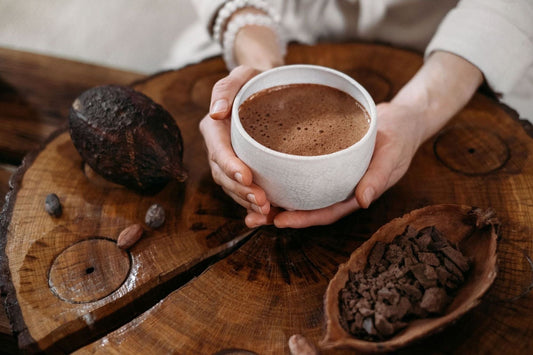
Ceremonial cacao is an unsweetened drinking chocolate made from direct-trade whole cacao beans, typically single origin. The premium sourcing of ceremonial cacao beans allows for lower temperature roasting, which in turn retains the bioactive compounds of cacao much better than a high temperature roast.
When grinding and conching ceremonial cacao, lower speeds and temperatures are again used because the goal is to retain the bioactive compounds in cacao. Higher temperatures and speeds are simply not needed because the quality of the beans is higher. There are many parallels between our process and the bean to bar process, but we bring extra focus to making just 100% cacao and testing for beneficial cacao polyphenols and flavonoids.
Lastly, once it is liquid chocolate, ceremonial cacao simply is tempered and molded, typically in blocks or discs. There is nothing added or removed in the entire process, it is simply the transformation of a premium cacao bean.
The benefits of ceremonial cacao on spirit, mood, and body are substantial (check out our reviews!), which is why people love to sit with it intentionally and drink it slowly.
Cacao Powder vs. Ceremonial Cacao: Key Differences
The differences between cacao powder and ceremonial cacao are numerous. Here are our top 5:
1) The fat content of cacao powder is standardized to 8-10%. Ceremonial cacao is typically 45%-55% natural cacao butter. This makes an enormous difference in how your body absorbs the cacao and retains the flavonoids in it.
2) The "dutching" process of cacao powder is a significant difference, because it dramatically reduces the heart health and cognitive benefits associated with ceremonial cacao. Ceremonial cacao is never dutched.
3) The storage of cacao powder is easy, since the fat has been removed, it won't melt and clump. Ceremonial cacao needs more attention, as just like any chocolate bar, it will easily melt once the temperature exceeds 90F.
4) Cacao powder is ground into tiny fine particles with much more surface area, so it can oxidize more easily. Because ceremonial cacao comes in solid form, it has little surface area and is typically at low risk of oxidation by comparison.
5) The vast majority of cacao powder is very difficult to trace back to the farm (even organic and fair trade), as often the cacao is blended from many regions in large factories and the cacao beans are purchased from large trading warehouses. Ceremonial cacao by contrast is typically single origin and fosters direct trade relationships with small communities of farmers.

Which Has More Nutrients — Cacao Powder or Ceremonial Cacao?
The nutrients in ceremonial cacao are absorbed by the human body far more effectively than the nutrients in cacao powder. This is because cacao butter is nature's original carrier fat for absorption of cacao nutrients, and ceremonial cacao has five times as much of it!
The beneficial flavonoids and antioxidants enter the human body more effectively with ceremonial cacao. Ora's ceremonial cacao has been tested at over 700mg flavonoids per serving, which far exceeds most chocolate products.
Most concerningly, the dutching process, used for many cacao powders, adds alkaline agents to the cacao which significantly degrades cacao flavonols and antioxidants by 60% to 90%. Some undutched cacao powders claim high flavonoids, but it is unclear if they are effectively absorbed by the human body without the natural cacao butter.
The beneficial minerals in cacao such as magnesium are also best absorbed with the presence of natural cacao butter. Even raw cacao powder, which doesn't use the same high temperatures as traditional cacao powder, still has the fat removed, so it's not equivalent to ceremonial cacao.
Ceremonial cacao uses premium cacao beans and is made at much lower temperatures and it is never dutched, so it also has many more bioactive compounds affecting mood and well being. It supports sustained energy, heart health, and is valued for mood support and mental clarity. If you are interested in receiving the full health benefits of cacao, we highly recommend using ceremonial cacao over cacao powder.
Can You Substitute Cacao Powder for Ceremonial Cacao?
The answer depends on the use case. Cacao powder is great for baking and smoothies, yes. However for a cup of ceremonial cacao, the answer is quite simply no. Cacao powder does not give the same effects or benefits so you cannot substitute it for making a ceremonial cacao drink.
This is an understandable question, because cacao powder is much cheaper than ceremonial cacao, but there's a reason for this. It's more than a question of simply the fat, because you would think you could purchase cacao powder and add coconut oil for the same effect. However the lower quality cacao beans and the higher temperature processing means you lose out on the benefits ceremonial cacao offers. And the natural cacao butter is perfectly tailored to deliver the benefit of cacao, not coconut oil.
Don't take our word for it, try it at home! Make a cacao drink with just cacao powder and water. It doesn't taste very good. Then make a cacao drink with ceremonial cacao and water, and you'll see how much more nutritious and nourishing the latter is. If you specifically need a powder for baking or smoothies, the gap narrows considerably if you choose a non-dutched, higher-fat cacao powder from a single, traceable source, which is exactly why we developed our own.
What's the Difference Between Cacao Powder and Cocoa Powder?
Typically cacao powder is less processed and retains more nutrients than cocoa powder. The words aren't regulated and often used interchangeably as there is much semantic confusion on the spelling of cacao. The cacao tree itself is "cacao", not "cocoa", so "cacao powder" semantically implies a closer connection to the tree and less processing, but we've seen exceptions.
In both cases, cacao powders or cocoa powders commonly available are roasted at high heat, are missing the natural cacao butter, and use lower quality beans than ceremonial cacao.
When Should You Use Each One?
Many people choose to have both ceremonial cacao and cacao powder in their homes, because they have different primary purposes. Cacao powder is great for baking, cold smoothies, and desserts, and can be used 1:1 with many recipes. Ceremonial cacao behaves more like a chocolate bar than a powder, meaning it needs to be used in a hot drink or melted for use in a recipe with a double boiler. However it comes with many benefits: ceremonial cacao is great for morning rituals, as a coffee replacement, for heart health, mineral balancing, and elevating mood. The natural fat in ceremonial cacao also make it perfect for a keto diet. So they are completely different use cases and experiences of chocolate!

What About High-Quality Cacao Powder?
We used to recommend against cacao powder entirely. Then we found an exception.
While sourcing cacao for our ceremonial line, we discovered a Chuncho cacao grown by the Machiguenga indigenous communities near Cusco, Peru — farmed traditionally, regeneratively, with native cacao trees never commodity-graded. The beans were simply too good to ignore.
Our Triple Fat Cacao Powder is made from these beans, ground and cold-pressed without alkalization, dutching, or chemical treatment of any kind. At 28–30% natural cacao butter — three times the fat of standard cacao powder — the flavonoids and minerals are actually bioavailable. It is single origin, direct trade, and independently lab tested for heavy metals.
It is not ceremonial cacao. The cacao butter has been partially pressed out, and it will not deliver the same depth of effect as whole ceremonial cacao. But for baking, smoothies, and daily use where powder format is preferred, it is the best cacao powder we have encountered — and it closes a good bit of the nutritional gap separating standard cacao powder from ceremonial cacao.
Ready to Experience the Difference?
Whether you're new to ceremonial cacao or restocking your pantry with cacao powder, we have you covered with some of the highest quality available.
Frequently Asked Questions
What is the difference between ceremonial cacao and cacao powder?
What is the difference between ceremonial cacao and cacao powder?
Can I use cacao powder instead of ceremonial cacao for a cacao drink?
Can I use cacao powder instead of ceremonial cacao for a cacao drink?
Is cacao powder as nutritious as whole ceremonial cacao?
Is cacao powder as nutritious as whole ceremonial cacao?
Is ceremonial cacao the same as raw cacao powder?
Is ceremonial cacao the same as raw cacao powder?
Why does Ora Cacao use whole cacao instead of cacao powder?
Why does Ora Cacao use whole cacao instead of cacao powder?
What is dutched cacao powder, and should I avoid it?
What is dutched cacao powder, and should I avoid it?