

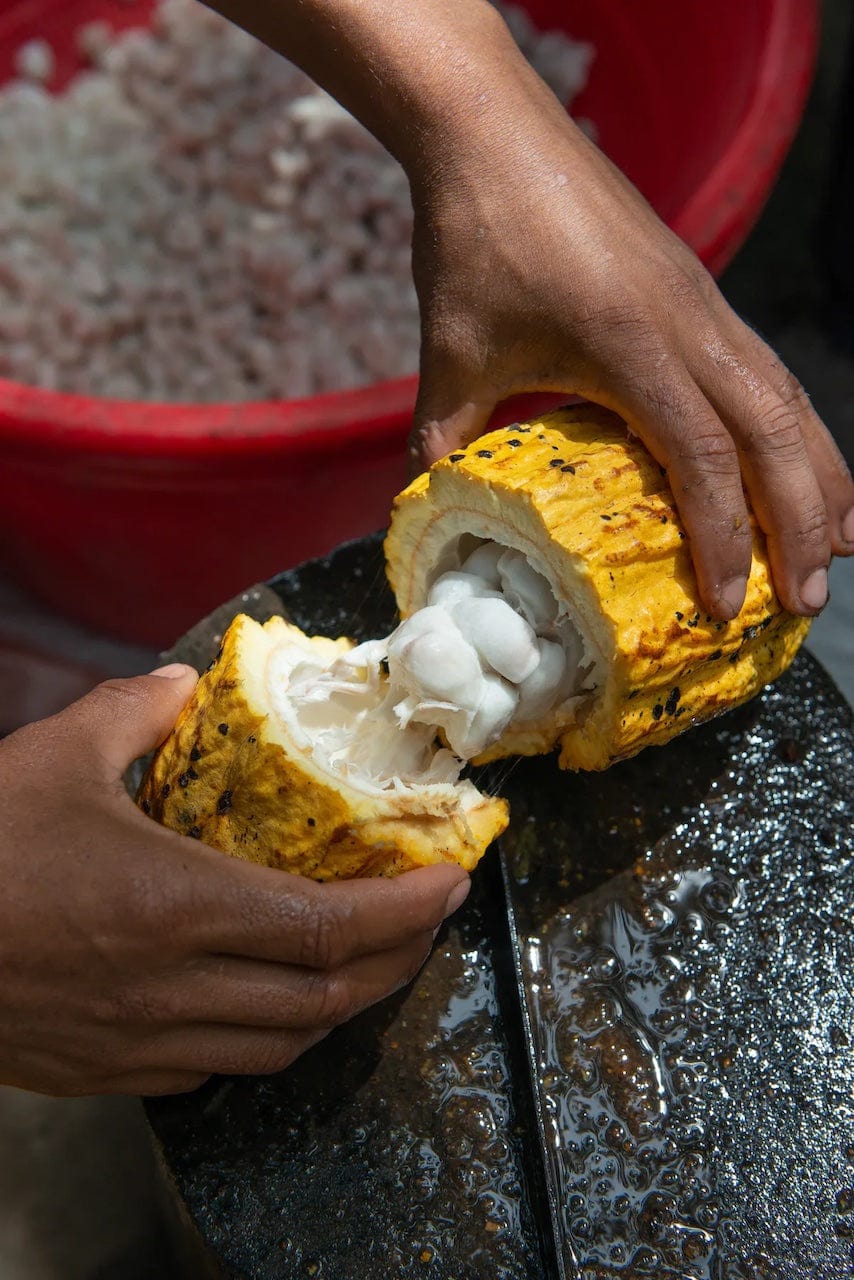
Why “raw cacao” in the first place?
“Raw” first became a buzzword for a healthy lifestyle when the concept of dieting with just fruits and vegetables was introduced. As part of a cleanse, eating just high quality and uncooked fruits and vegetables could be enormously beneficial. “Raw” set a standard of requiring that none of the food eaten was heated to above 116 degrees Fahrenheit.
Of course, people naturally wanted to eat chocolate as part of the raw lifestyle, so the concept of “raw chocolate” was introduced. Much industrial cacao is processed with high heat, to achieve uniformity and mask bad flavors from low quality inputs. The sourcing of industrial cacao is also questionable, and “raw cacao” connotes simplicity, quality and purity in the chocolate sourcing. So the idea of “raw chocolate” was enormously popular.
However, as you’ll learn soon, while the concept of “raw” works great for fruits and vegetables, it is very problematic when applied to cacao for a number of reasons. We’ll break those down here.
The Taste of Chocolate Can’t Technically Be Raw
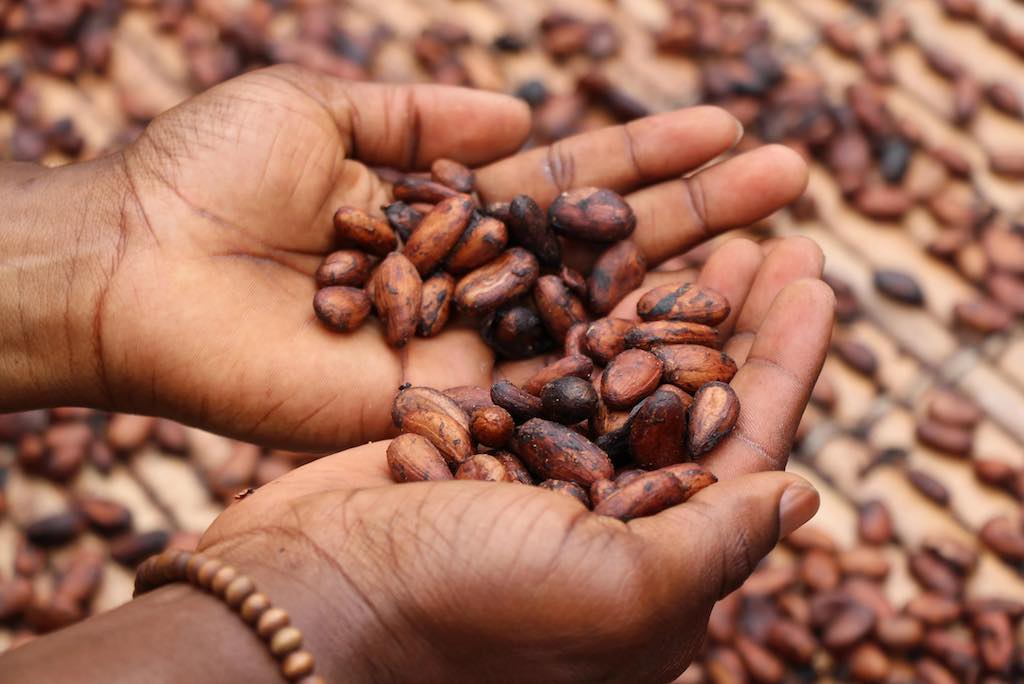
It is VERY rare to find truly raw cacao. Most modern cacao is fermented after it is harvested, and the fermentation temperatures need to reach 124°F for proper flavor development, which is beyond the raw threshold of 116F.
This simple understanding of the fermentation process makes it clear “raw cacao” is misleading marketing, from a technical perspective. We’ve met people who claim all their cacao never exceeds the 116F threshold during fermentation. We find this to be a very unlikely and unverifiable claim, as cacao fermentation is typically conducted in wooden boxes, and continuous monitoring for a full week would be prohibitive. Does the company get rid of the perfectly good cacao if it exceeds 116F?
We're all about bringing science and non fluff marketing to the bean to bar chocolate making process, which is why we do regular testing not just for heavy metals, caffeine and theobromine, but also all of the beneficial cacao polyphenols and cacao flavonoids.
Cacao Actually Does Quite Well With Low Heat
The raw foods temperature threshold of 116F was developed specifically to protect certain enzymes and compounds which are present in uncooked fruits and vegetables. Both fruits and vegetables have a high water content. Dried cacao beans, on the other hand, have a water content of less than 8%. As a result, cacao actually does quite well with low heat, and instead of losing potency when heated, it undergoes an alchemical activation when they are roasted.
Low temperature roasting brings out the flavor of the cacao beans, and dries out the remaining moisture. Flavonoids are a plant based compounds which function as a type of antioxidant as well as having various anti-inflammatory, antiviral, neuro-protective, and cardio-protective properties. We use lab testing to validate our low temperature process, and in contrast to traditional processing, discovered that over 80% of the original flavonoids compounds present in raw cacao beans are present in our finished ceremonial cacao.
While un-roasted cacao is certainly an improvement over industrial cacao roasting which uses high temperatures to create uniform results out of inferior cacao inputs, it's missing the magic and the flavor the fire element introduces. In our opinion making good ceremonial cacao involves taking the cacao through a four element transformation as we work with it, including fire, air, earth, and water. So of course, we can't leave out the fire!
The Maillard Reaction: Why Low Heat Activates Cacao
When amino acids and reducing sugars are exposed to moderate heat in a low-moisture environment, they react to form hundreds of new flavor compounds — pyrazines, aldehydes, and furans — responsible for the roasted, nutty, and complex aromatic character of well-made cacao. Cacao's low water content (under 8% in dried beans) creates ideal conditions for this reaction to occur efficiently at lower temperatures than would be required in a high-moisture food.
The key insight is that the Maillard reaction and flavonoid preservation are not in conflict when temperatures are kept low. High-temperature roasting accelerates flavor development but simultaneously degrades flavanols (the primary antioxidant compounds in cacao) and destroys thermolabile aromatic precursors — you get speed and uniformity, but you lose depth and potency. Low-temperature roasting reaches the same Maillard chemistry on a longer time horizon, developing the full aromatic complexity while keeping heat-sensitive compounds intact.
This is the science behind what indigenous traditions discovered empirically: a long, careful, low-heat toast — stirred continuously over coals — produces cacao with more complexity, not less. The elders who tended the comal weren't just following ritual. They had developed a method that modern food science confirms is chemically optimal.
What Happens to Flavonoids During Industrial Cacao Processing?
Most commercial chocolate starts with the same raw ingredient. The difference is what happens between the farm and the bar.
High-temperature roasting is the first point of loss. Industrial roasters prioritize throughput and uniformity, which requires higher temperatures. At elevated temperatures, the flavonoids and procyanidins in cacao — the compounds responsible for most of its documented health benefits — degrade significantly. A 2010 study in the Journal of Agricultural and Food Chemistry found that roasting conditions had a measurable and significant impact on cacao's procyanidin content.
Dutch processing (alkalization) is the second, larger point of loss — and the one most consumers don't know about. Dutching raises the pH of cacao powder using an alkalizing agent (usually potassium carbonate). This process mellows the natural bitterness and astringency of cacao and darkens the color, which is why "Dutch process" cocoa powders look darker and taste smoother. But the same 2010 study found that Dutch processing dramatically reduced procyanidin content — by far the largest single reduction across all the processing variables studied, greater than fermentation, drying, or roasting combined.
This is why most commercial cocoa powder — including organic cocoa powder — has a fraction of the flavonoid content of minimally processed ceremonial cacao. The Dutching step that makes it taste mild is also the step that strips out the compounds that make cacao beneficial.
Ora Cacao does not Dutch process. We do not alkalize. Our cacao is not cocoa powder — it is whole pure cacao with nothing adding or removed, processed only with low and slow heat and extended grinding, which is why our lab results show over 80% of original polyphenol and flavonoid content preserved in the finished product.
Indigenous Wisdom: It’s All About Balance.
Indigenous peoples of the Americas have been working with cacao for many hundreds of years. In no instance have we found “raw cacao” practices. In fact, we’ve encountered a celebration of the process bringing the alchemy of the fire element into chocolate making. Indigenous cacao traditions all over central and south America toast their cacao at low temperatures using a clay comal and the coals from an open fire. We believe there is wisdom in these indigenous preparations of cacao, so we too lightly toast our cacao, so it is not raw.
The key here is balance. Roasting cacao beans is a very delicate process, and overheating them will damage them. It takes enormous skill to roast cacao beans using traditional methods, which is why the elders of the community were tasked with carefully stirring and rotating the cacao as it was being roasted to prevent any of the beans from burning.
The same applies to modern chocolate making - with premium quality beans, there is no need for high temperatures. Just a low temperature roast is sufficient to activate the cacao beans and introduce so much delightful flavor into the chocolate making process. As we’re sure you’ll experience from our finished product and the many reviews on our website, our low temperature roast does not negatively affect the energetic integrity of the cacao.
See our article on the Cacao Elemental Spiral to learn why ceremonial cacao requires a proper balancing of the four elements of earth, water, fire, and air. For ceremonial cacao we use only the minimal heat needed to bring out the natural flavors in our premium cacao.
Purity of Process
People associate much more than temperature with the word raw. It implies a level of purity and connection in the chocolate making process.
We fully support and practice this ourselves, but we choose not to call it raw, because of everything we described above. Rather, the purity of process and integrity in sourcing is part of our definition for ceremonial cacao.
References
- Crafack M. et al. (2014). The impact of yeast starter cultures on microbial communities and volatile compounds in cocoa fermentation. PLOS ONE. PMC 4837722.
- Payne MJ. et al. (2010). Impact of fermentation, drying, roasting, and Dutch processing on flavonoid content of cacao beans. Journal of Agricultural and Food Chemistry. PubMed 20843086.
Frequently Asked Questions
Is Ora Cacao raw cacao?
Is Ora Cacao raw cacao?
Why does Ora Cacao use a low-temperature process?
Why does Ora Cacao use a low-temperature process?
How is Ora Cacao's roasting process different from commercial chocolate?
How is Ora Cacao's roasting process different from commercial chocolate?
Is raw cacao actually more nutritious than roasted cacao?
Is raw cacao actually more nutritious than roasted cacao?
Does roasting destroy the health benefits of cacao?
Does roasting destroy the health benefits of cacao?
What is Dutch process cacao, and does it have fewer antioxidants?
What is Dutch process cacao, and does it have fewer antioxidants?
What's the difference between cacao and cocoa?
What's the difference between cacao and cocoa?
Does Ora Cacao have more flavonoids than dark chocolate?
Does Ora Cacao have more flavonoids than dark chocolate?