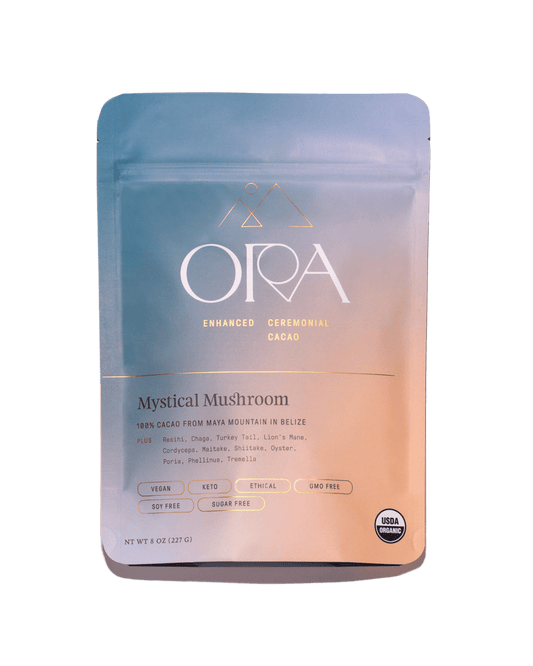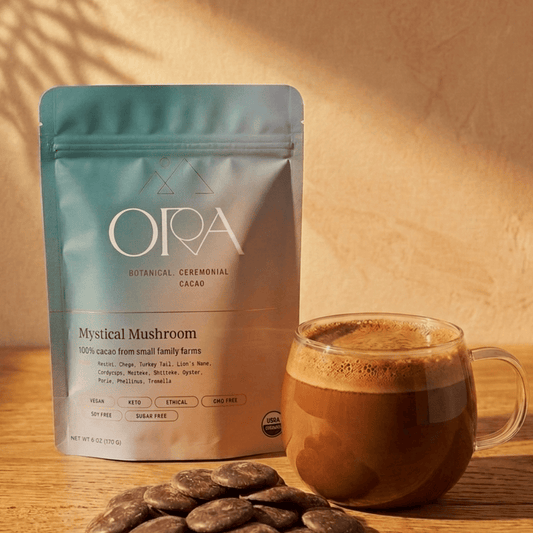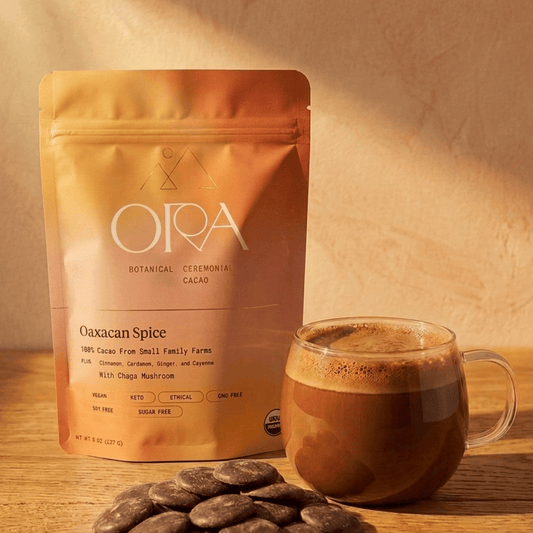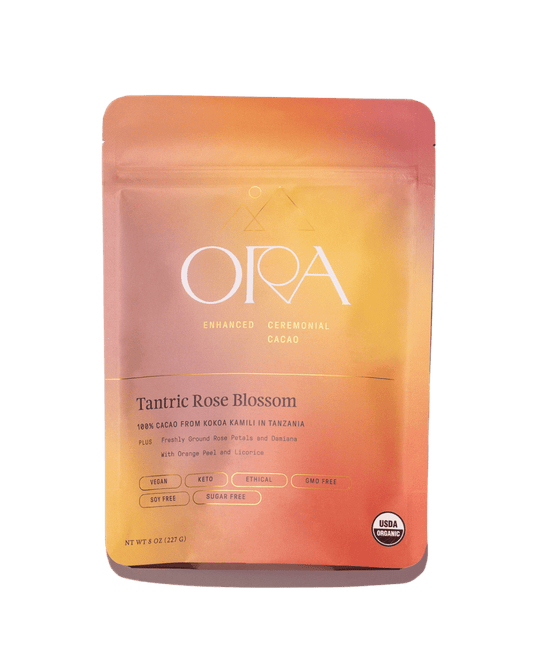
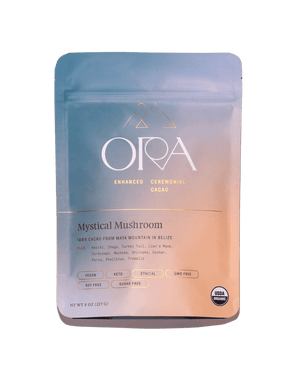




We often talk about ceremonial cacao as heart-opening - the warmth you feel in the body, the sense of connection that can emerge during a ritual. But there’s also interesting science behind cacao’s relationship with mood.
Inside cacao are compounds that interact with the gut and brain, two systems deeply involved in how we feel day to day. One particularly fascinating connection involves anandamide, an endocannabinoid our own bodies produce that has earned the nickname “the bliss molecule.”
Keep reading to explore what science is uncovering about cacao, the brain, and mood.
Find Cacao for Your Ritual
The Gut-Brain Connection: Where Mood Begins

The gut is often called our second brain, and for good reason. It produces up to 95% of the body’s serotonin - the neurotransmitter that supports mood, motivation, and emotional balance (1). It also communicates directly with the brain through the vagus nerve, forming a two-way feedback loop that influences how we think, feel, and respond to the world.
When the gut is inflamed or imbalanced, this communication can falter. Nutrient absorption drops, stress hormones rise, and the immune and lymphatic systems - both rooted in the gut - become overworked. The result can be everything from fatigue to anxiety to poor digestion. Supporting the gut means supporting the entire inner ecosystem that governs both immunity and mood.
Cacao supports gut health in multiple ways: its fiber helps nourish beneficial gut bacteria (2), its flavonoids are shown to reduce inflammation (3), and its natural fats can enhance the absorption of minerals and neurotransmitter precursors (4). Cacao’s high magnesium content helps relax the smooth muscles in the intestinal walls and encourages the body to move out of fight-or-flight and into rest-and-digest mode (4).
When we pair cacao with mindful presence - sipping slowly, breathing deeply, and letting gratitude soften the nervous system - we create the conditions for real absorption to happen. Cacao’s ability to support gut health creates the foundation for better mood.
Anandamide: The “Bliss Molecule”

Cacao naturally contains Anadamide. The Sanskrit word ananda means “bliss,” which is where anandamide gets its name. Anandamide is naturally produced by the body as part of the endocannabinoid system, which helps regulate processes including mood, memory, pain, appetite, and reward. Rather than simply creating happiness, anandamide acts as a signaling molecule that helps regulate communication within the brain. (5)
Anandamide is produced by the body as it is needed and then broken down relatively quickly by an enzyme called FAAH. Research shows that when FAAH is inhibited, anandamide can remain active longer, extending its signaling within the endocannabinoid system. (5) Research on chocolate has also identified naturally occurring compounds called N-acylethanolamines that may slow the breakdown of anandamide already produced by the body, potentially allowing its effects to last longer.
There is still more to understand about how cacao’s compounds interact with this system in the human body, but anandamide offers one fascinating piece of how cacao supports an uplifted mood. And, cacao’s relationship with mood doesn’t come down to one “bliss molecule,” there are other neuromodulators also present in cacao, and research into cacao flavanols gives us another way to understand what may be happening in the brain.
Explore Ceremonial Cacao
What Else Happens in Your Brain?

Cacao flavanols have been studied for their effects on nitric oxide production, which helps blood vessels relax and supports healthy circulation. Research in humans has also observed increased blood flow to gray matter after consuming flavanol-rich cocoa, which means improved cognitive functioning (2).
Increased cerebral blood flow helps deliver oxygen and glucose to brain tissue, while cacao polyphenols have also been studied for their interaction with signaling pathways involved in learning and memory. Research has explored their relationship with BDNF, a protein involved in neuron survival, synaptic growth, and neurogenesis. (2).
Researchers have also looked at what happens beyond blood flow and cellular signaling. Studies of cocoa and chocolate have reported changes in mental fatigue, cognitive performance, and activity in areas of the brain involved in taste and reward, although findings vary between studies (2).
The experience of feeling our mood uplifted when we drink cacao is the result of more than one compound acting in isolation. Research continues to uncover how cacao’s naturally occurring compounds interact with our gut and our brain through different pathways, giving us a deeper understanding why we experience improved mood, focus, and connection from cacao.
Experience Ceremonial Cacao
References
(1) The Gut-Brain Axis: Influence of Microbiota on Mood and Mental Health
https://pmc.ncbi.nlm.nih.gov/articles/PMC11818468/
(2) Cocoa and Dark Chocolate Polyphenols: From Biology to Clinical Applications
https://www.ncbi.nlm.nih.gov/pmc/articles/PMC5465250/
(3) The neuroprotective effects of cocoa flavanol and its influence on cognitive performance
https://pmc.ncbi.nlm.nih.gov/articles/PMC11816940/
(4) Differential contributions of theobromine and caffeine on mood, psychomotor performance and blood pressure
https://www.sciencedirect.com/science/article/abs/pii/S0031938411003799
(5) Brain Activity of Anandamide: A Rewarding Bliss?
https://pmc.ncbi.nlm.nih.gov/articles/PMC6460372/