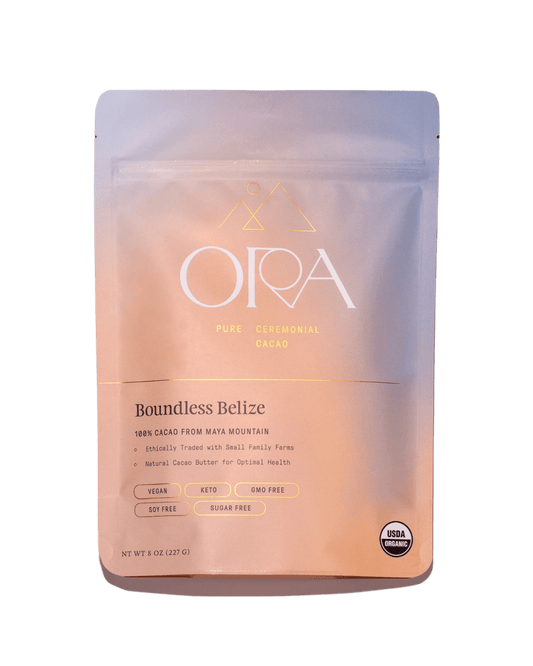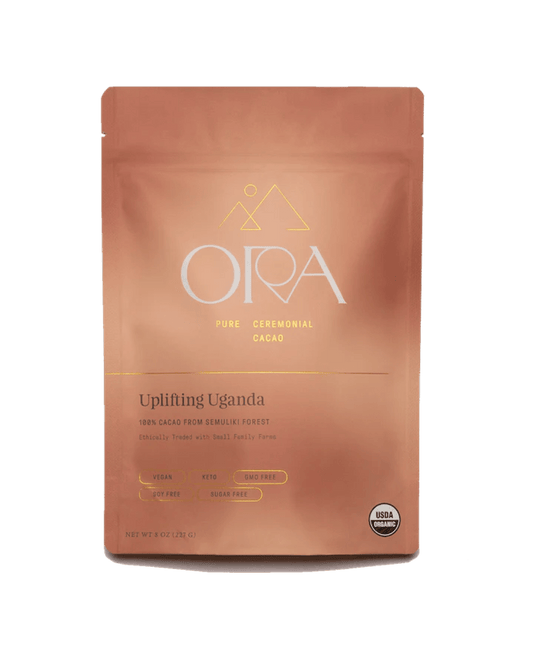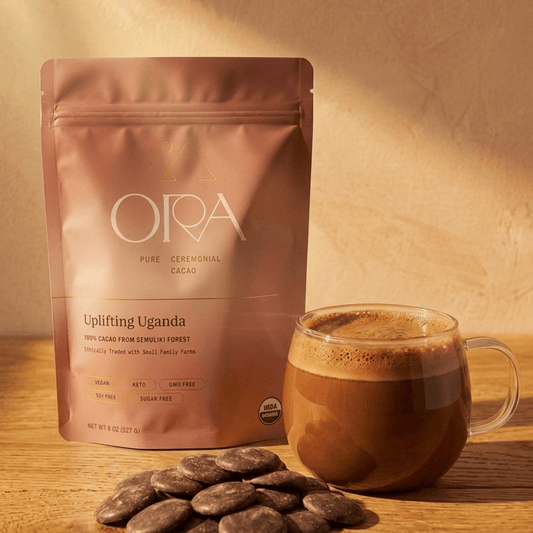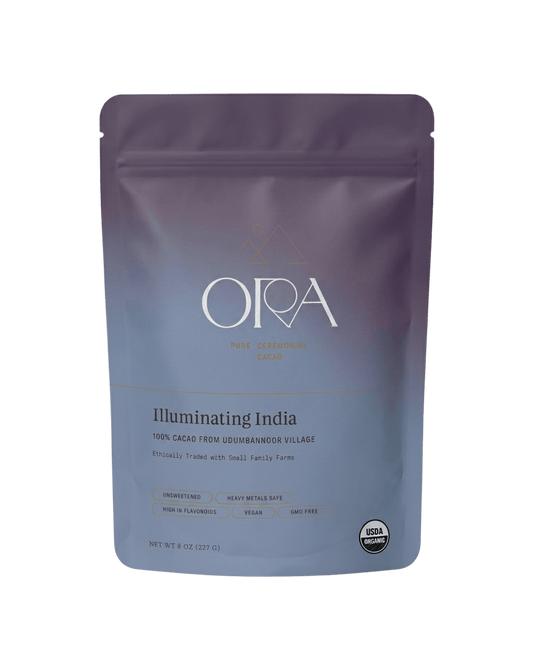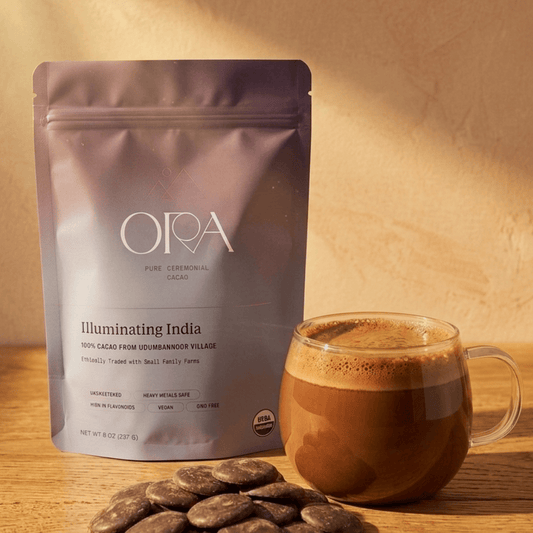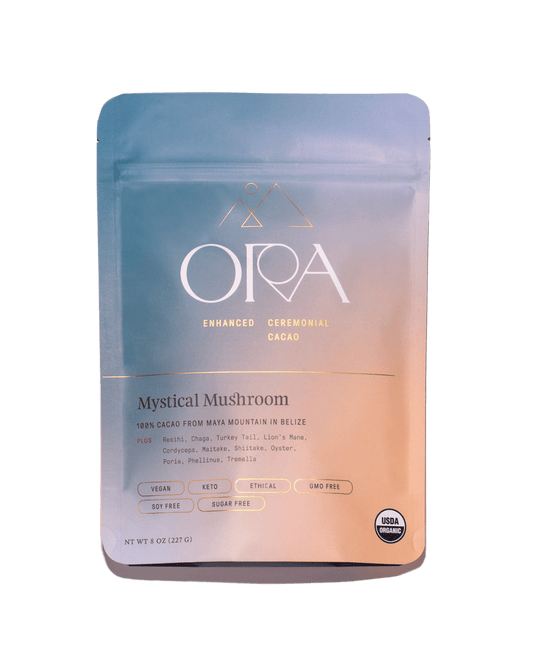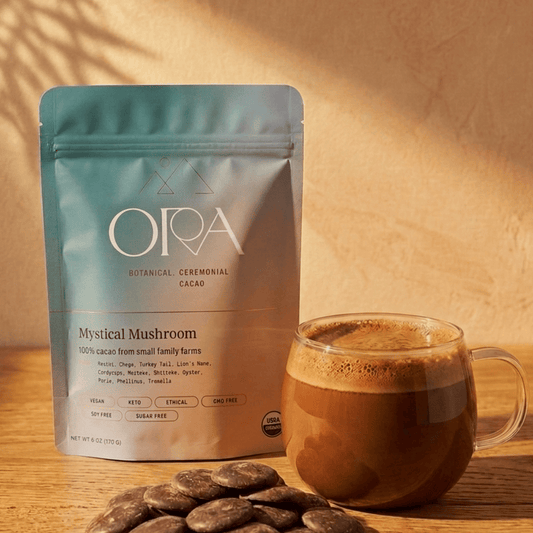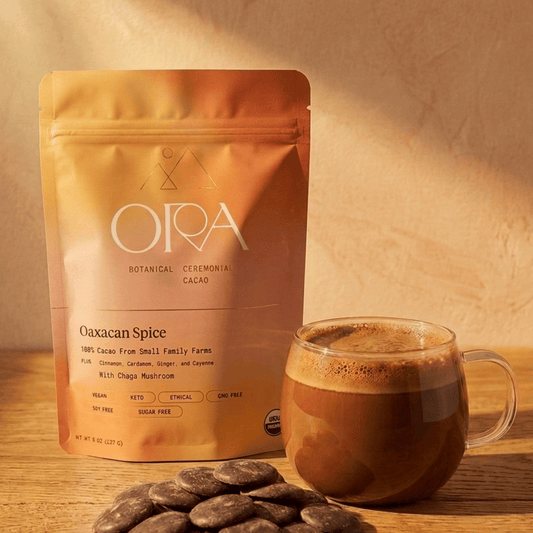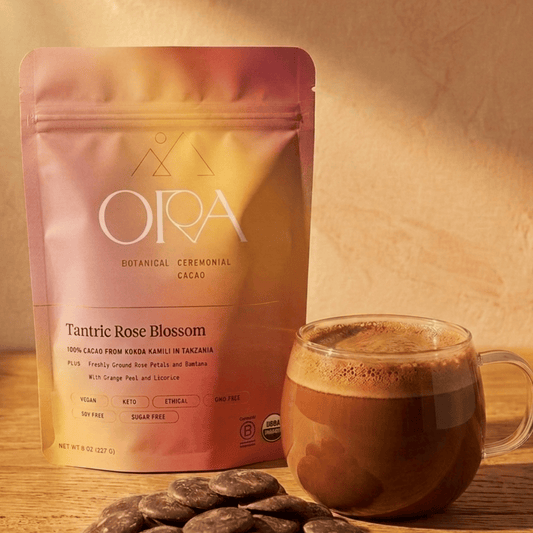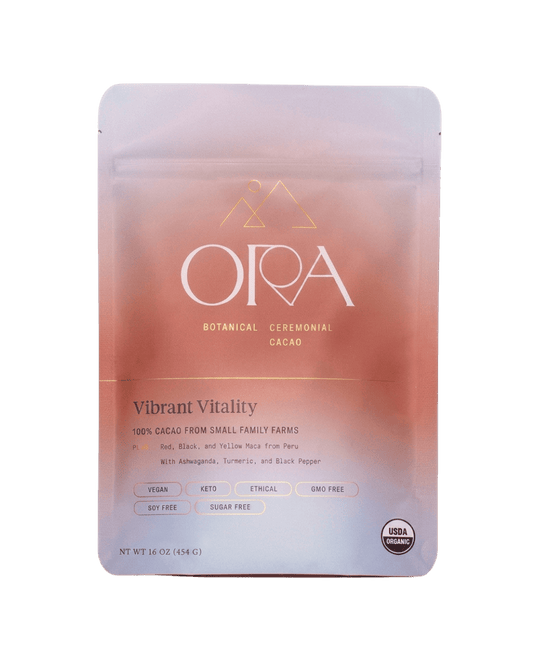
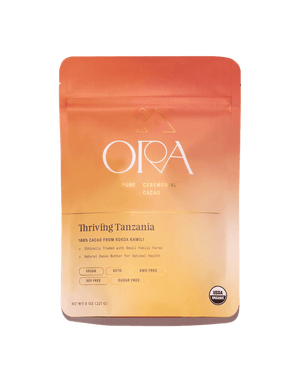
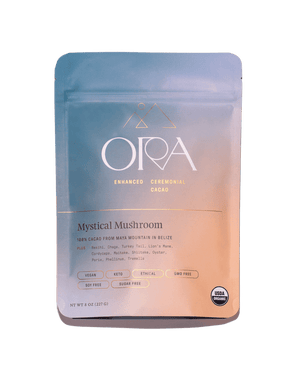
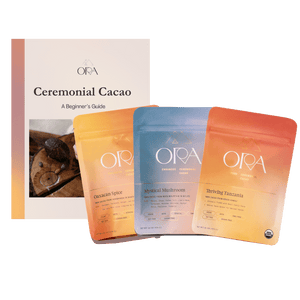



For years, many of you have asked about the difference in theobromine and caffeine levels between the various cacaos. We originally had just a few data points that we averaged, and you might recognize the values of 212mg theobromine and 36mg caffeine from our packaging.
As we continue to grow, we’re able to get curious about the 100% cacao that we make, and run lab tests to learn more. Now, we’re beginning to report distinct theobromine and caffeine values for each of our cacaos, so you can understand exactly what’s in each one. We’re planning on updating these values annually.
Keep reading to explore our latest lab results and the science behind why caffeine and theobromine content varies between cacao origins.
Explore Our Cacao Origins
Our Latest Caffeine & Theobromine Lab Results

Here are the latest results from our most recent harvest, per 0.8oz (23g) serving:
Boundless Belize
Caffeine: 38mg
Theobromine: 255mg
Illuminating India
Caffeine: 29mg
Theobromine: 234mg
Thriving Tanzania
Caffeine: 25mg
Theobromine: 279mg
Uplifting Uganda
Caffeine: 22mg
Theobromine: 209mg
Tested by Cotecna / ACT Lab using TM0036 / HPLC methodology.
As you can see, nearly all our cacaos tested lower in caffeine, and higher in theobromine, than our previous lab results had indicated. Part of this likely has to do with using a new lab, and part of this is due to variability between cacao harvests (which we share more about below). Ultimately these values are just one data point, and we look forward to seeing how these values trend over time as we run new harvest seasons through the same test.
What’s fascinating is that between Boundless Belize and Uplifting Uganda, the caffeine content is nearly 70% higher, and between Thriving Tanzania and Uplifting Uganda the theobromine content is 33% higher. Based on personal experience, we haven’t noticed a huge difference on the impact on energy levels between these cacaos. So we would caution against a reductionist analysis of these numbers or even selecting cacao based on these numbers, as the body’s absorption and processing of these molecules is modulated by many other compounds in cacao.
If you’re curious why the numbers vary between origins, the short version is this: a tree's genetics largely determine how much theobromine and caffeine its beans contain. The final amount in your cup of cacao is also impacted by the ripeness of the pods when they’re picked and how the beans are fermented.
Why Caffeine & Theobromine Vary Between Origins
The impact of cacao genetics
The cacao tree makes theobromine first, then converts a small portion of it into caffeine. Research into cacao's enzymes suggests this pathway appears to have evolved independently in cacao, separately from coffee and tea. Researchers tracking developing pods found that theobromine accumulated in large amounts in the seeds of mature pods, most of it produced in the cotyledons, the part of the bean that becomes the nib.
Because the tree builds these compounds with its own enzymes, its genetic makeup determines how much it can produce and the balance between theobromine and caffeine. One study comparing cacao trees found total alkaloid content ranging from 24 to 50 mg/g, nearly a twofold difference. The ratio between the two is distinctive enough that researchers have used it as a chemical marker to tell cacao varieties apart.
You might expect us to tell you which genetic “type” of cacao has the most caffeine but we’ve found that framing doesn’t hold up. Most cacao today is a mix of three or four genetic groups, and every tree in a field is a genetic individual. (Here’s why we don’t talk about Criollo.) And because each harvest blends beans from hundreds of farms in the region, the numbers in our table reflect each origin’s whole community of trees, not any single tree.
The impact of cacao pod ripeness
Alkaloids keep building as the pod grows. The classic study on this found that accumulation in the seeds was greatest near the end of pod growth and continued into ripening, and one review reports up to a 74.2% increase in theobromine and caffeine between immature and mature beans.
Because the harvest for each origin combines beans from hundreds of farms in the region, one farmer picking early won't move the numbers much. What can still differ is the timing of the harvest itself. A Venezuelan study found significant differences in alkaloid content between harvest dates, which is one reason the same origin can test differently from one harvest to the next.

The impact of fermentation
At each of our origins, freshly harvested beans from hundreds of small farms are fermented together at a local fermentation center. (Here’s more on how that works.)
As the beans ferment, some of their theobromine and caffeine content migrate out into the surrounding pulp and shell. One classic study found about a quarter of the alkaloids in the bean were lost this way. Most of that happens in the first few days, with fermentation beyond 96 hours not reducing it further.
Our partners follow set protocols, but a ferment is a living process. Weather, batch size, and the wild microbes doing the work vary a little each time.
The impact of soil and climate
Soil and climate almost certainly also play a role. A study of cacao from 85 farms across Ecuador found high variability in alkaloid content from one growing area to another. But in the real world, soil, climate, genetics, and fermentation all happen together, and even recent research acknowledges they can’t be cleanly separated. So at this point, we aren’t able to make any clear claims on how soil and climate impact the theobromine and caffeine content in cacao between regions.
What this means for your cup of cacao
One thing is for sure: 1mg of caffeine in cacao isn’t the same as 1mg in coffee. Cacao butter slows how quickly the caffeine is absorbed, and theobromine, the gentler and longer-lasting stimulant, is the primary effect. (Here’s our full guide to cacao vs. coffee.)
Each person responds differently to stimulants and there are hundreds of other compounds in cacao, including compounds that help you relax that counteract the stimulants. In our experience, Illuminating India is our gentlest, least stimulating cacao, but that’s not what the numbers show - based on the numbers, Uplifting Uganda has the lowest amount of caffeine and theobromine. So you can treat these test results as a starting point but always pay attention to how each cacao feels in your body.
With vigor,
Jonas
Ps. You’ll still see old values on our packaging for several to many more months. Once we reprint packaging we’ll update with these newer results, but in the meantime the most up to date numbers will live on our website.
References
-
Timbie, Sechrist & Keeney (1978). Application of HPLC to the study of variables affecting theobromine and caffeine concentrations in cocoa beans.
-
Roasting-induced changes in cocoa beans with respect to the mood pyramid (2020). Food Chemistry.
-
Bioactives in cocoa: novel findings, health benefits, and extraction techniques (2024). Separations.
-
Changes in bioactive compounds during fermentation of cocoa harvested in Amazonas, Peru (2023).
-
Rapid determination of the roasting degree of cocoa beans by imaging analysis (2022).
-
Compositional profiling of volatile and non-volatile compounds in Australian cocoa nibs (2026).