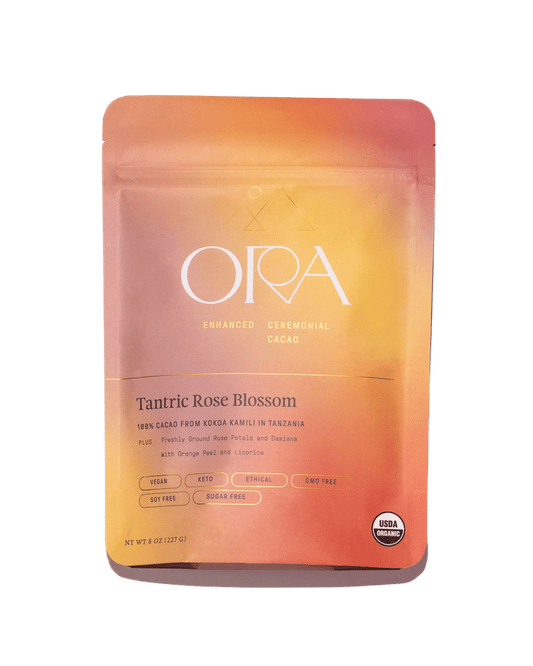





On Monday, we honored Indigenous Peoples Day - a time to give gratitude to the Indigenous peoples who carry Earth’s wisdom - the original stewards of land, water, and seed. Their teachings remind us that the Earth isn’t an object to be owned, but a being, a mother, that we are in relationship with through sacred reciprocity.
In Maya traditions, cacao has long been used in ceremonial offerings of gratitude, honoring the relationship between people, the land, and the natural world. In the Andes, the principle of ayni teaches sacred reciprocity: to give and receive in equal measure, maintaining balance between people, nature, and spirit. Among the Kogi people of the Sierra Nevada, reciprocity is expressed through constant dialogue with the Earth, offerings of thought, intention, and care that keep the world in harmony.
Keep reading to explore how we can deepen this connection through reflection, gratitude, and right relationship.
Explore Ceremonial Cacao
Connecting With The Land You Live On
 Acknowledging the Indigenous peoples whose territory we inhabit places us in context of the longer arch of human history and invites humility as we consider frameworks of reality that were here before our current lens.
You can begin by discovering whose land you live on through native-land.ca. You’re invited to do some research to learn a bit about their culture and their language. Then, offer a simple gesture of gratitude - a flower, a song, or even the first sip of your cacao to the soil. Small acts like these bring us back into awareness and provide context for the story of the land and the people that inhabited it. You’re also invited to connect with the more-than-human beings that are your neighbors. Maybe there’s a giant, old tree near your home you like to sit under, migrating birds that you can feed or leave water out for, deer, wildflowers, a creek. Paying attention to the life that’s humming all around you and finding ways to nourish and be in relationship with those beings is a powerful practice of reconnection.
Cacao As A Gateway To A Wider Lineage
Cacao has been tended for thousands of years by the Maya, Aztec, Olmec, Toltec, and countless other Indigenous cultures - each carrying its own relationship, ceremony, and story with the plant.
When we drink cacao today, we participate in that wider lineage - one that continues to evolve through the hands and hearts of Indigenous farmers and families. To honor this connection is to remember that cacao is not something to consume but a relationship we can tend.
Pause before your next cup. Learn where your cacao is grown, who tends the trees, and what stories the soil carries. (You can find this information on each specific cacao’s page on our website.) As you sip, listen. Let gratitude move through you like breath - a soft acknowledgment that every comfort we enjoy is born of another’s care. And just as we honor cacao, we can remember that every plant carries a spirit - an intelligence that invites relationship rather than consumption.
When we listen to the teachings of plants, they guide us toward balance.
Cacao whispers: move slower, listen deeper, open wider. Each cup is an opportunity to return to harmony - not just with ourselves, but with all that breathes and grows around us.
From Awareness to Action: Walking in Right Relationship
 Cacao’s history, like that of many sacred plants, has been shaped by colonization and extraction. Yet in every moment we are given a choice: to continue the story of separation, or to participate in one of reconnection. The first step of this is education - we recommend the book Open Veins of Latin America: Five Centuries of the Pillage of a Continent by Eduardo Galleano for a deeply humbling orientation and a history of the exploitation of Latin America by commodity, including cacao.
At Ora, we are rewriting this story through direct trade partnerships with Indigenous and smallholder farmers, regenerative agroforestry practices that support biodiversity, and equitable pay that nourishes entire communities. These aren’t just ethical choices - they are expressions of right relationship, a return to balance where everyone, including the land, is valued as part of the ecosystem.
We also honor the teachings of reciprocity and gratitude by giving back through the Farmer Climate Resiliency Fund, which provides direct aid to our farming communities impacted by climate change. Two years ago in Belize, wildfires devastated about 10% of our farmers’ cacao trees. Our fund helped them to meet a year’s worth of daily expenses while they began cleanup and replanting.
If you feel called to support this work, you can contribute to the Farmer Climate Resiliency Fund the next time you order cacao. Your contributions help us embody our intention of reparation and right-relationship through ceremonial cacao.
Learn About the Farmer Climate Resiliency Fund
Cacao for Reflection: Boundless Belize
 Boundless Belize invites us into reflection, honoring cacao as a living connection to the land and the generations who have tended it.
Sourced from the lush rainforests of Southern Belize, this cacao is grown by Indigenous Q’eqchi’ and Mopan Maya families who maintain an intricate knowledge of the forest as a living ecosystem, an essential part of the long term stewardship of tropical rainforest regions, and many of the cacao farms are directly adjacent to rainforest preserves.
Begin your ritual with gratitude for the land, the farmers, and the unseen forces that made this moment possible. As you sip, offer well wishes or prayers for the continued thriving of these lands and communities. Boundless Belize is an ally for heart-centered rituals, supporting reflection, grounded presence, and deeper relationship with the natural world.