



Yesterday was the International Day of the World’s Indigenous Peoples, a day that recognizes the rights, cultures, knowledge systems, and contributions of Indigenous Peoples around the world.
For those of us who drink ceremonial cacao, this day offers an opportunity to deepen our understanding of cacao’s history and honor the Indigenous peoples whose relationships with ceremonial cacao extend back thousands of years.
We are deeply grateful to the Indigenous peoples who recognized the sacredness of cacao and had the courage to maintain this wisdom, even in the face of violent colonizing forces. Some of these peoples whose names we know include the Mayan, Aztec, Olmec, Toltec, and Marañon peoples. To honor this connection, we’re sharing more below about the communities who grow your cacao.
Continue reading to explore the farming communities, sourcing relationships, and spirit of reciprocity behind every cup.
The Communities Who Grow Your Cacao
 At Ora, we source cacao from smallholder farmers, many of whom are indigenous communities, who farm biodiverse agroforestry systems. The energy of the farming communities becomes just as much a part of your cacao experience as the land itself. Below is some information about the people who grow your cacao, so you can send them some love and gratitude the next time you sip cacao.
Belize
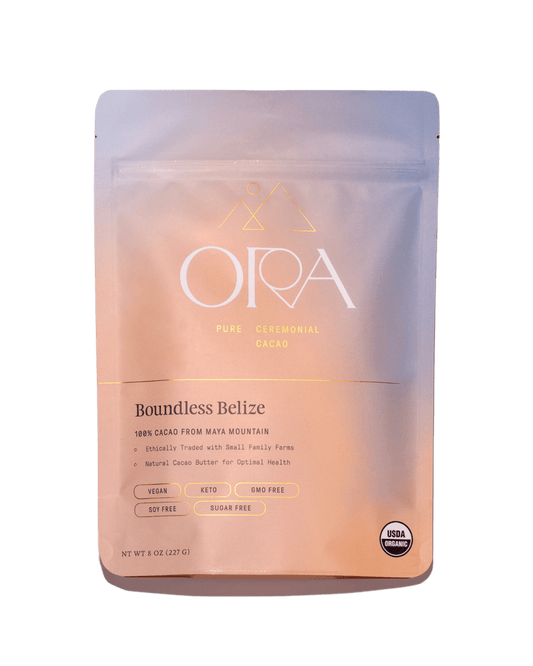
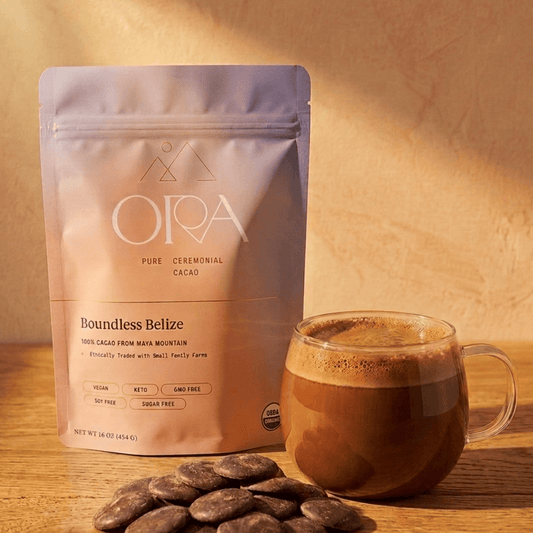
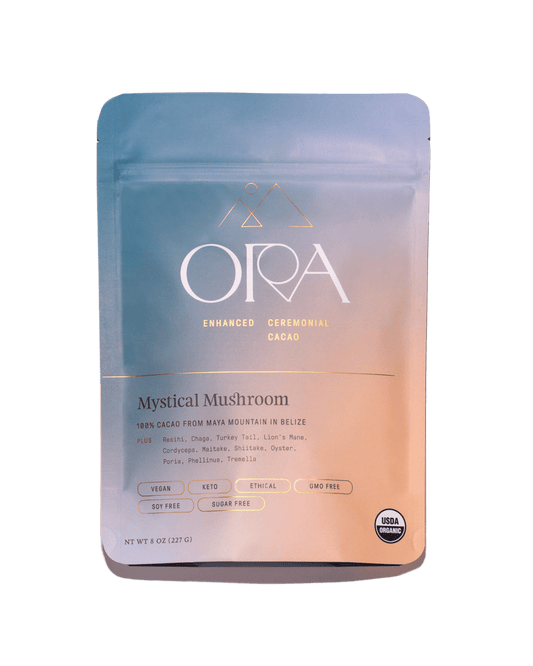
In southern Belize, our cacao comes from 300 small (1 to 5 acre) organic family farms. Seventy-five percent of these farming families are Indigenous Q’eqchi’ and Mopan Maya, and they grow their cacao with deep respect and understanding of the local ecology.
Walking through the rainforest with a knowledge guide is like walking through a living medicine cabinet. Farmers bring home various plants not just for cooking, but to care for injuries and diseases. This intricate knowledge of the forest as a living ecosystem is an essential part of the long-term stewardship of tropical rainforest regions.
Guatemala
Our Guatemala cacao is grown in a remote village of 125 families in the Alta Verapaz region, where the Indigenous Q’eqchi’ Maya communities have remained deeply connected to their traditions. Cacao provides more than 90% of the community’s income, and we purchase all of the cacao they produce.
The farmers speak Q’eqchi’ Maya, one of more than twenty Indigenous languages still spoken in Guatemala today. Their knowledge of cacao is among the most intact we have encountered across our sourcing trips, rooted in a deep respect for nature, the surrounding mountains, and the land they have stewarded for generations.
(We are working on bringing our Guatemalan cacao back in stock in the next few months. Stay tuned for updates!)
India
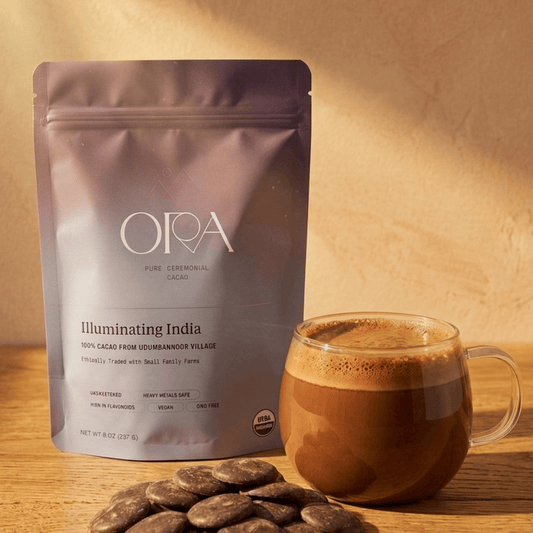
In Southern India, hundreds of smallholder farmers grow cacao in the rich red soils of the Western Ghats, one of the world’s eight biodiversity hotspots. Their cacao grows beneath coconut, areca nut, and rubber trees, intercropped with spices like cardamom, ginger, and nutmeg.
Our partners at GoGround Beans & Spices purchase fresh, wet cacao directly from farmers each week, providing fair, consistent pay. They also employ and train women from nearby villages while investing in post-harvest education and regenerative growing practices.
Tanzania
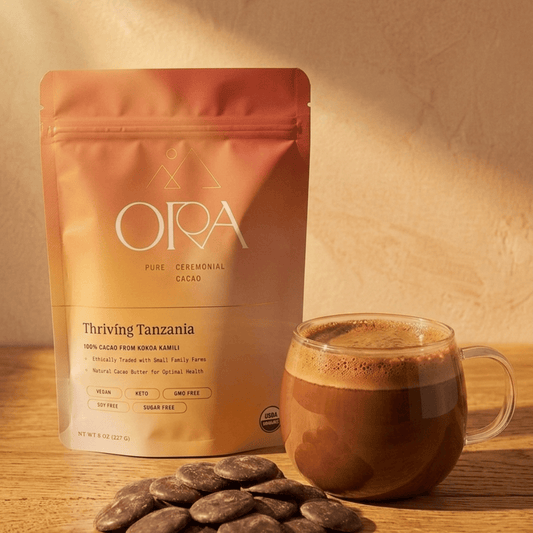
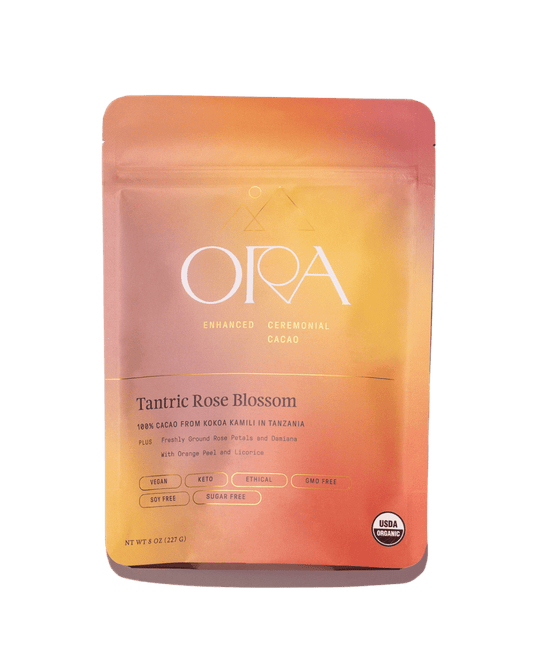
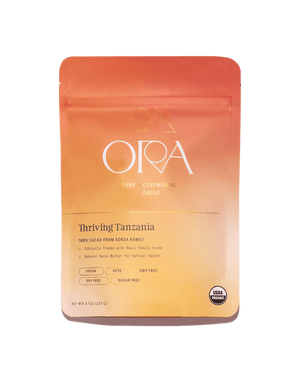
In Tanzania’s Kilombero Valley, 700 small organic family farms grow cacao bordering Udzungwa Mountains National Park, one of East Africa’s most biodiverse landscapes. Our partners at Kokoa Kamili purchase fresh cacao from these farming families and, within their first three years, farmers received the highest prices for cacao in Tanzania.
Their post-harvest facility has also created meaningful local employment in a region where formal jobs are rare, supporting both farming families and the wider community.
Uganda
In Uganda, our cacao is grown in the lush Semuliki Forest beneath the Rwenzori Mountains, the highest and most permanent source of water for the Nile River. More than 50% of the farmers are women, and 70% are under the age of 35. Sourcing from this community provides sustainable, conservation-based livelihood for a generation of young farmers in a rural area who take great pride in their work.
The communal, joyful spirit of this community is literally sung into the cacao as they harvest and ferment.
Explore single origin, pure cacaos
Direct Sourcing & Reciprocity With Farming Communities

An important part of our relationship with cacao is acknowledging the legacy of extraction, commodification, and oppression in Central America, South America, and Africa. We can do our best to reconcile the past by respecting and honoring the people who grow our cacao through long-term relationships, paying higher than market prices to support good quality of living for farmers, and supporting farming communities with our resiliency fund.
Our aim in purchasing only from small cacao farmers is to de-aggregate wealth and support regional economies where farmers sell wet cacao to high-quality local fermentation centers, allowing additional value to remain in the community before export.
Our direct trade model means we pay above-market prices to provide good incomes for farmers, many of whom are Indigenous. Paying a premium for regeneratively grown cacao also provides a pathway for the next generation of farmers to earn a viable livelihood as smallholder farmers. Otherwise, without viable income, the next generation leaves their villages to find work in nearby cities.
Supporting the people behind our cacao means supporting the long-term stewardship of both farming communities and the ecosystems they care for.
Another way that we practice reciprocity is through our Farmer Climate Resiliency Fund. Many of the farmers we source from have little access to financial services, they depend largely on the seasonal cacao harvest for income, and they don’t have substantial savings.
We’ve seen a number of instances where they’ve faced climate related circumstances outside of their means, such as high waters causing the collapse of the only bridge connecting a village to the outside world, or cacao pod rot invading a region because of lack of labor due to COVID 19 for proper organic management.
Rather than launching one off fundraisers for each calamitous event, we've established a climate resiliency fund to help our farmers prepare for and recover from climate change impacts.
This is part of Ora's long term commitment to the farming communities we work with, letting them know they are not alone and their livelihoods will be protected. Ora contributes a portion of our revenue to the fund annually, and you’re invited to contribute to the fund when you place an order on our website.
Learn About Our Sourcing
Bringing Reciprocity Into Your Ritual

At Ora, we define cacao ceremony through three core pillars: gratitude, intention, and reciprocity.
Reciprocity is the reminder that ceremony is relational. Cacao ceremony is not just about receiving benefits and experiences from cacao. It is equally about awakening to your relationship with all of life on this planet.
From a place of gratitude and intention, we might naturally find ourselves asking how we can give back for all the gifts we receive: to the land we live on, to our communities, to the Earth, to our friendships, and to the people who grow our food.
Working with cacao ritual invites us to participate in reciprocity. We see this as the key to shifting away from unconscious consumerism into present-moment relationality with the web of life.
One way to honor this connection is by learning about the land and culture of the people from where your cacao originates. As you drink, consider what you’ve learned, offer your gratitude, and before your first sip, offer your cacao back to the Earth in reciprocity.