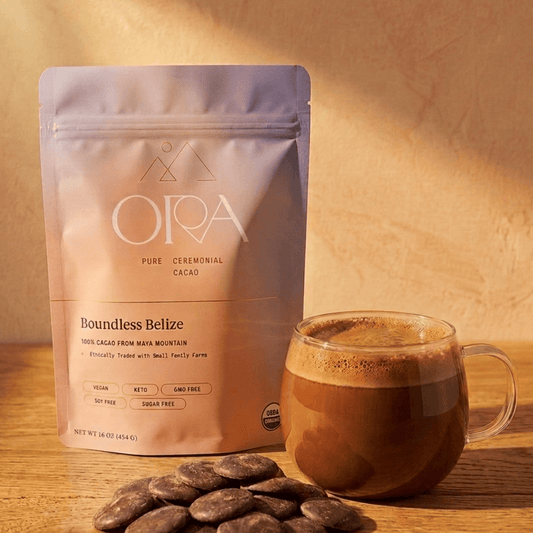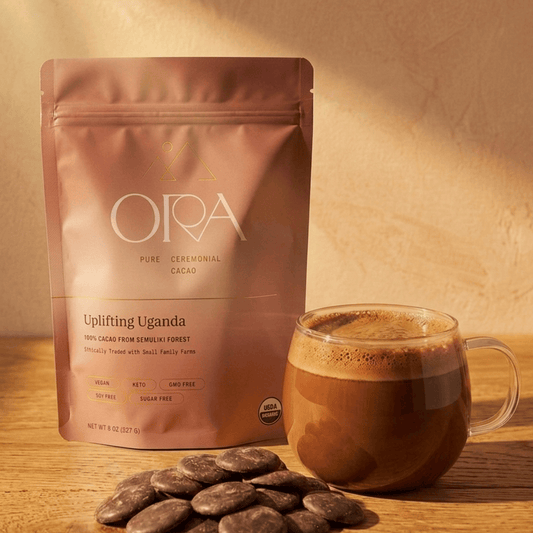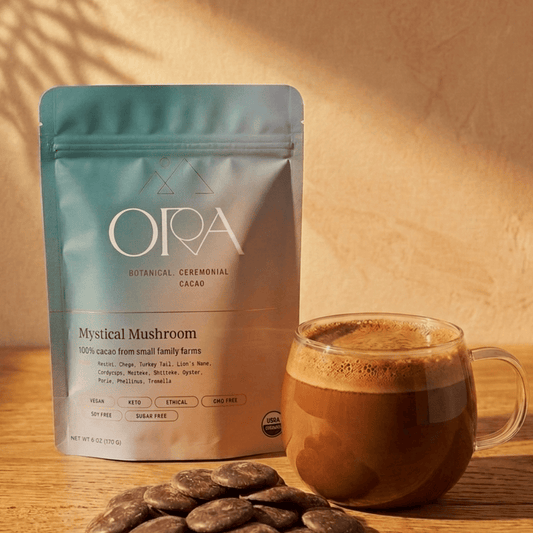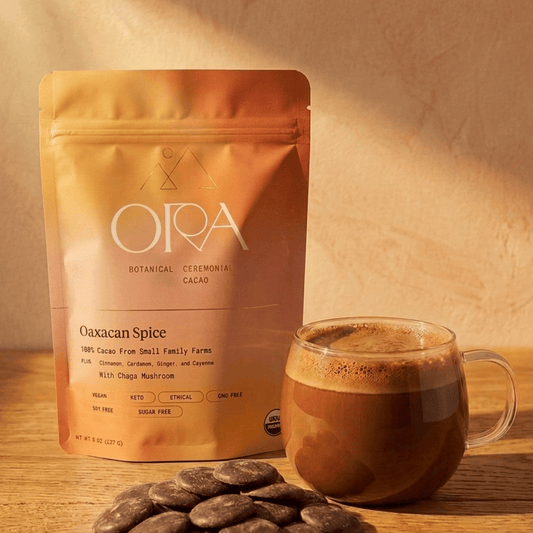




Have you ever noticed your hands feel warmer, your chest feels more open, or your whole body feels more alive after drinking ceremonial cacao? Ceremonial cacao has a very different feel than coffee, and there is real physiology underneath that experience. Researchers have spent years studying how cacao flavanols support circulation, blood vessel function, nitric oxide pathways, and even cerebral blood flow connected to healthy aging.
Keep reading to explore the circulation science behind ceremonial cacao.
Explore Cacao For Circulation
Flavonoids, Nitric Oxide, And Blood Vessel Health

One of the most studied ways cacao supports circulation is through its flavanols, a group of plant compounds that includes epicatechin, catechin, and proanthocyanidins. These compounds support the body’s nitric oxide pathways, which are central to how blood vessels relax, widen, and allow blood to move more freely. (2)
Nitric oxide is one of the body’s natural signaling molecules for vascular ease. When nitric oxide is more available, the inner lining of the blood vessels, called the endothelium, can better communicate with the smooth muscle around the vessel wall and support healthy dilation. Researchers have spent years studying how cocoa flavanols influence endothelial function and vascular responsiveness. (2)
This is part of why cacao can feel warming in the chest, hands, face, or extremities. The experience is not just “energy” in the way we usually think about stimulation. It can also be the felt sense of circulation increasing, blood vessels softening, and oxygen moving through the body with more ease.
Research on cocoa flavanols has repeatedly looked at flow-mediated dilation, which is a measure of how well blood vessels relax in response to increased blood flow. In several studies, higher-flavanol cocoa improved this marker of endothelial function, often within a few hours of consumption and sometimes with stronger effects after consistent intake over time. (2)
That matters because healthy circulation is not just about the heart beating harder. It is about the blood vessels remaining flexible, responsive, and able to adapt. Cacao’s flavanols appear to support this flexibility by helping preserve nitric oxide availability, reducing oxidative stress that can break it down, and supporting the endothelial pathways that regulate vascular tone. (1)
Cacao And Healthy Blood Pressure

When we talk about cacao and blood pressure, the most accurate way to say it is this: cacao supports healthy blood pressure by helping the blood vessels relax and function more efficiently. It is not that cacao “forces” blood pressure down. It appears to support the underlying vascular environment that helps blood move with less resistance. (2)
This is where the nitric oxide conversation becomes so important. Blood pressure is partly shaped by how constricted or relaxed the blood vessels are. When vessels are tense or less responsive, the body has to push blood through a narrower pathway. When vessels relax appropriately, circulation can feel smoother and more supported.
Several reviews and intervention studies have found small but meaningful reductions in systolic and diastolic blood pressure with flavanol-rich cocoa, especially in people with elevated blood pressure or cardiovascular risk factors. The effects vary depending on the dose, the type of cocoa product, the flavanol content, and the person’s baseline health, but the pattern keeps pointing back to vascular function and endothelial support. (3)
This is also why minimally processed cacao matters. Many conventional chocolate products lose a significant amount of flavanols through high heat, alkalization, heavy refining, added sugars, and other processing steps. Processing methods can dramatically influence flavanol levels and antioxidant activity within cacao itself. (1)
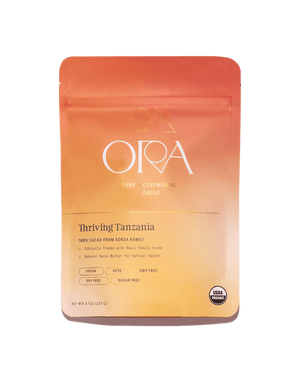
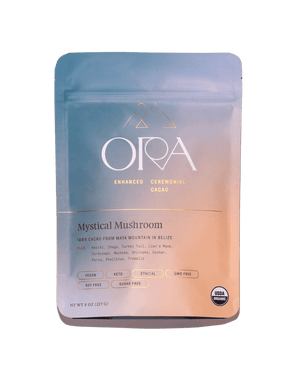
Ceremonial cacao is different from highly processed chocolate because it keeps the whole cacao bean intact. You receive the naturally occurring cacao butter, flavanols, minerals, and theobromine together. That whole-food matrix is part of why cacao can feel steady, warming, and nourishing rather than sharp or fleeting.
Feel The Difference In Your Cup
Circulation Is Different Than Stimulation
 People can sometimes confuse cacao’s energy with coffee energy, but the experience is often very different. Coffee primarily works through caffeine and the central nervous system, while cacao contains a different balance of compounds, including flavanols, theobromine, minerals, and naturally occurring cacao butter. (1)
Ceremonial cacao often feels steadier and more body-centered compared to coffee which can feel sharp or overstimulating. Cacao can create a sense of feeling more open, awake, or emotionally present without the same jittery intensity or abrupt crash commonly associated with coffee.
To understand this impact, researchers explored how cocoa flavanols may influence cerebral blood flow and vascular responsiveness connected to cognitive performance and healthy aging. These findings suggest cacao’s effects are not only about physical circulation, but also about supporting blood flow and oxygen delivery in ways that may influence the brain and nervous system over time. (1)
So when ceremonial cacao feels warming, grounding, or quietly enlivening, there is real physiology underneath the experience. It is not simply stimulation. It is the unique combination of compounds within the whole cacao bean working together in a way that feels both supportive and sustainable.
Explore Ceremonial Cacao
References