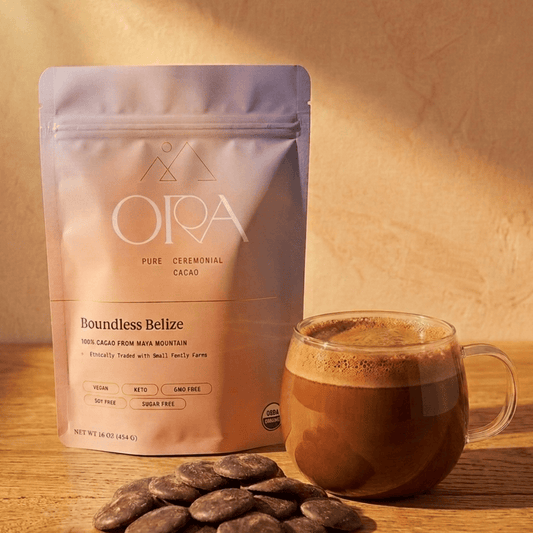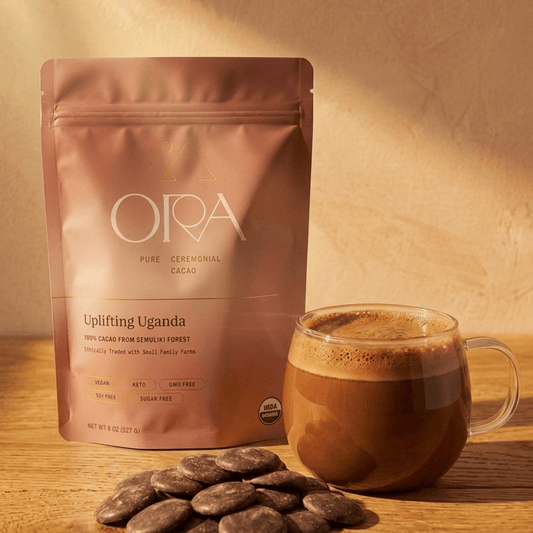
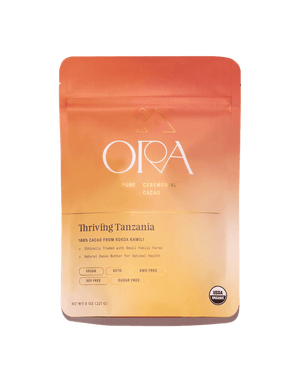
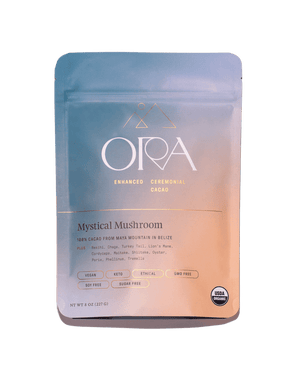
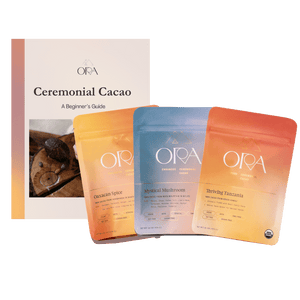


If you’ve ever noticed yourself craving chocolate around your period, there is really good reason for it! Ceremonial cacao’s bioactive compounds are surprisingly supportive for common symptoms during your cycle: cramping, mood dips, and low energy.
Keep reading to explore the science behind why cacao supports more easeful periods.
Explore Ceremonial Cacao
How Cacao Supports Period Cramps

Cacao is one of the richest dietary sources of flavanols, plant compounds with a well-studied effect on blood vessels. Research has demonstrated that cacao flavanols help blood vessels relax and support healthy blood flow.(1) Because reduced blood flow to the uterus is one of the drivers of cramping pain, cacao’s ability to relax blood vessels and increase blood flow offers a plausible explanation for its ability to help ease cramps, although this hasn’t yet been studied directly in the uterus.
Cacao’s flavanols have also been studied for their effects on compounds involved in muscle contractions. In a small study, eating flavanol-rich chocolate raised levels of prostacyclin, a compound which relaxes blood vessels.(2) The same study found that eating flavanol-rich chocolate lowered leukotrienes, signaling molecules involved in smooth muscle contractions, including those found in the uterus. These findings indicate one more way cacao’s high flavanol content may ease cramping.
Cacao is also a meaningful source of magnesium, a mineral essential for muscle relaxation. Magnesium supports the normal contraction and relaxation of muscles, which is especially relevant when experiencing menstrual cramps. Research has identified magnesium supplementation as a promising treatment for menstrual pain at 150mg - 365mg of magnesium/day.(3)
One serving of ceremonial cacao has 52 mg of magnesium - this isn’t enough magnesium on it’s own to alleviate cramping but is a meaningful part of a holistic, high-magnesium dietary approach that supports during menstruation. In addition to cacao, you can eat magnesium-rich foods like pumpkin seeds, almonds, quinoa, spinach, etc. to receive the benefits.
Theobromine & Cacao’s Gentle Energy

During menstruation, your estrogen and progesterone dip to their lowest levels throughout the month, which creates fatigue and low energy. This is usually most intense in the days leading up to the first day of your period and the first few days of your period before these hormones begin to increase. During this time, cacao offers a source of sustained, gentle energy, primarily through theobromine rather than caffeine.
Progesterone breaks down into allopregnanolone, a calming compound which acts on the brain’s GABA receptors to ease anxiety and help regulate the stress response.(4)(5) As progesterone drops in the days before a period this calming effect decreases, which can make stress feel more intense in your body.
Caffeine raises cortisol, the body's main stress hormone,(6) so in the days before and during your period, coffee can amplify feelings of anxiety and fight-or-flight, without the buffer of stress regulation from progesterone. This is a key reason why you probably want to swap out coffee for cacao right before and on the first few days of your period.
Ceremonial cacao does contain a small amount of caffeine, ~36 mg compared with about 95 mg in a cup of coffee, but the effects are more slowly released due to naturally occurring fats. Most of cacao’s energy comes from theobromine, a milder stimulant which rises and fades more gradually.(7)(8) Theobromine has a longer half-life than caffeine, contributing to its more gradual energy profile.
The Connection Between Hormones, Cacao & Mood

Low levels of estrogen and progesterone also significantly impacts mood.. Estrogen supports serotonin activity in the brain. As estrogen levels drop, changes in serotonin activity decrease mood, energy levels, and sleep.
Cacao’s mood lifting compounds are another key reason you might find yourself reaching for chocolate during your period. Ceremonial cacao contains neurotransmitters and neuromodulators also found in our brains, along with some of the precursors our bodies use to produce them. These include anandamide, phenylethylamine (PEA), tryptophan, and tyrosine.
Cacao contains anandamide, also known as the bliss molecule, and it also contains N-linoleoylethanolamine, a fatty acid which inhibits the enzyme that breaks anandamide down. Anandamide is one of the key reasons people describe drinking cacao as expansive and blissful. Phenylethylamine (PEA), sometimes called the “love molecule,” is another compound naturally present in cacao, associated with excitement, enthusiasm, and focus.
Cacao doesn’t contain serotonin itself. What cacao contains is tryptophan, the amino acid precursor your body converts first to 5-HTP and then to serotonin in the brain. It also contains tyrosine, the amino acid precursor to dopamine, which plays an important role in motivation, pleasure, and the anticipation of reward.
There are several mechanisms in cacao working simultaneously to help create more easeful periods. The flavanols support healthy blood flow, which may help ease the reduced circulation that contributes to cramping, and they lower inflammatory compounds linked to uterine contractions. Its magnesium content contributes to muscle relaxation and cramp relief. Its mood-related compounds may offer some support at a time when estrogen and progesterone are at their lowest. And because its energy comes mainly from theobromine rather than caffeine, it offers a gentler alternative to coffee on the days when your body's natural stress buffer is lowest.
It seems the science is catching up to the wisdom which we’ve heard anecdotally and probably what you’ve experienced first-hand of cacao creating more easeful periods.
Experience Ceremonial Cacao