



These are some of the most common questions we get asked about our ceremonial cacao. From the beginning of Ora Cacao back in 2014 with our first crowdfunding campaign, Ora Cacao has highly valued transparency and story telling.
We love sharing all we have learned about cacao. If you have a question that we don't answer, please reach out to our support team!
Navigate this article
2. What Makes Cacao Ceremonial-Grade?
3. How Is Ceremonial Cacao Different From Cocoa Powder or Chocolate?
5. Who Should Drink Ceremonial Cacao?
6. What Does Ceremonial Cacao Taste Like?
7. What Are The Benefits Of Ceremonial Cacao?
8. Does Ceremonial Cacao Help with Depression?
9. Does Ceremonial Cacao Help With Anxiety?
10. How Do You Make Ceremonial Cacao?
11. How Much Ceremonial Cacao Should I Drink?
12. When Is the Best Time to Drink Ceremonial Cacao?
13. How Should Ceremonial Cacao Be Stored?
14. What Is the Difference Between Ceremonial Cacao and Hot Chocolate?
15. Is Ceremonial Cacao A Good Alternative To Coffee?
16. Does Ceremonial Cacao Have Caffeine?
17. What is Theobromine and How Is It Different From Caffeine?
18. Is Ceremonial Cacao Safe To Drink Every Day?
19. Does Ceremonial Cacao Contain Heavy Metals?
20. Is Ceremonial Cacao Safe During Pregnancy?
21. Can Ceremonial Cacao Be Taken With Antidepressants Or SSRIs?
1. what is ceremonial cacao?
Ceremonial cacao is an unsweetened drinking chocolate made from direct trade whole cacao beans. The cacao is minimally processed to retain its bioactive compounds. It supports sustained energy, heart health, boosts mood, and is sipped with gratitude and intention.
Ceremonial cacao is ethically sourced from small holder, regenerative cacao farms. Pure ceremonial cacao should be made from just a single ingredient, whole cacao beans, with nothing added or removed. It can be combined with various superfoods, but should not be sweetened.
You, the person drinking the cacao, closes the circle of reciprocity with your relationship and desire for connection with cacao and its wisdom.
At Ora Cacao, we've been constantly improving our craft since 2014 and working with innovative partners and farmers disrupting the commodity cacao supply chain, to create the best possible ceremonial cacao for you. Our cacao is Organic Certified and heavy metals tested for safety.
2. What Makes Cacao Ceremonial-Grade?
The gold standard definition for ceremonial cacao is: regeneratively farmed, ethically sourced, 100% pure cacao, sipped intentionally with gratitude.
- Regeneratively Farmed - improving soil health, increasing biodiversity, and stewarding watersheds. Cacao is the primary cash crop for many farmers, but they grow dozens of food staples for their families and communities. In many cases, the cacao farms serve as buffer areas for protecting untouched pristine and second growth rainforest areas.
- Ethically Sourced - purchasing directly from small family farms and pay above market price to support farmer livelihoods. The direct trade model supports long term farmer livelihoods, unlike the broken cacao commodity system that keeps farmers in poverty and results in despair and abuses like child labor.
-100% Pure Cacao - ceremonial cacao begins with a single ingredient - whole, raw cacao beans. Nothing is added or removed (unless the addition of superfoods), a big contrast to the mainstream chocolate industry that uses all kinds of sweeteners, waxes, emulsifiers, and fats.
- Sipped With Gratitude - taking a moment to slow down and drink cacao with embodied gratitude allow us to have a far greater experience than simply a delicious beverage with health, mood, and energy benefits. This subtle inner shift in how we approach cacao is an important part of shifting out of the paradigm of consumerism, into right-relationship and reciprocity with the gifts of this Earth.
These four pillars are the gold standard that go into every batch of Ora Cacao since 2014.
3. How Is Ceremonial Cacao Different From Cocoa Powder and Chocolate Bars?
All ceremonial cacao is made from one single ingredient, cacao beans, that have been roasted, shelled, ground into liquid chocolate and cooled into discs or bricks.
Ceremonial-grade cacao also includes the intentionality that goes into it, the ethical sourcing outside of commodity supply chains, the regenerative farming practices, and the minimal processing that keeps the spirit of cacao intact.
Cocoa powder, on the other hand, is much more heavily processed in order to remove the cacao butter. Liquid cacao is loaded into truly massive industrial presses that exert hundreds of tons of force to squeeze out the cacao butter. Then the remaining material is finely hammered to create a powder. Cocoa powder is typically made from secondary or tertiary quality cacao and processed at high temperatures to mask defects and create uniformity at the low costs that consumers demand.
In truth, cocoa powder is a waste stream product from making cocoa butter, which is a high-grade fat in great demand for skin care, hair care, and culinary applications. Slick marketing of cocoa powder sells it as a superfood, but the true superfood is whole-food ceremonial cacao, as it still contains high-grade cacao butter, which is the best carrier fat for the medicinal properties of cacao. It doesn’t matter if the cocoa powder is raw or organic certified. It all fundamentally goes through this same process that renders it far inferior to ceremonial-grade cacao.
Quick note: Ora Cacao offers a triple fat cacao powder that has been minimally defatted, and that uses ethical and traceable cacao beans from Peru. Check it out in the link below!
Most chocolate bars are candy, with added sugar, cacao butter, emulsifiers, and other ingredients. Low cost is very important, so premium cacao beans are not used, and most brand contract manufacturing out to third party producers.
There are some craft bean-to-bar chocolate bars with transparent, ethical sourcing, using high quality cacao beans and minimal processing. The difference is that those chocolate bars usually have added sugar and sometime cacao butter in them and are intended to be consumed as a treat, like candy. Ceremonial cacao is crafted without sweetener to be used intentionally and mindfully to support your wellbeing.
4. What is a cacao ceremony?
A cacao ceremony is an intentional practice of drinking ceremonial cacao with gratitude, presence, and a specific intention. Unlike simply drinking cacao as a beverage, ceremony involves slowing down, creating a dedicated space, and opening to cacao as a teacher and ally for the mind and heart. It can be practiced alone as a daily ritual or in a group setting. The three universal pillars we recognize in cacao ceremony are gratitude, intention, and reciprocity. Modern cacao ceremony is not a replication of any specific ancient indigenous ritual — it is a contemporary emergence that honors the spirit of cacao and invites deeper connection with yourself and with life.
If you'd like to experience cacao ceremony with a series of at home guided meditation, check out Ora's Ceremonial Cacao 101 Course!
5. Who Should Drink Ceremonial Cacao?
A lot of people start drinking ceremonial cacao because they are looking for a coffee alternative that provides sustained energy. Ceremonial cacao also has beneficial neuro-modulators that uplift mood, and beneficial flavonoids that support cardiovascular health.
You'll probably love cacao if you are:
- Looking to replace coffee and want steady, sustained energy without jitters or crashes
- Interested in whole, functional foods that are minimally processed and rich in minerals and flavonoids
- Seeking calm focus and emotional balance for work, creativity, or daily life
- Sensitive to caffeine but still want a natural, uplifting boost
- Building a daily ritual like journaling, meditation, or mindful mornings
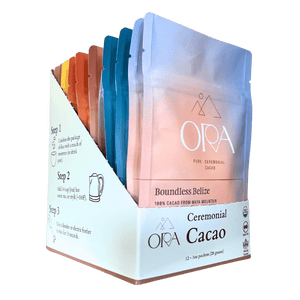
If you want to try the widest variety of ceremonial cacao offerings from the most trusted brand in ceremonial cacao, try Ora Cacao's ceremonial cacao kit or build your own bundle!
6. What does ceremonial cacao taste like?
Pure ceremonial cacao is naturally bitter and earthy, with a deep, rich chocolate flavor and none of the sweetness or additives of commercial chocolate. You can think of ceremonial cacao like an espresso shot, compared to drinking coffee with sugar such as in a sweet mocha. For people not used to unsweetened chocolate, it may take several months to shift the palate to get used to chocolate without sugar. There is a wide range of quality in ceremonial cacao ... we recommend trying Ora Cacao's ceremony kit so you can sample a range of options and find one you like.
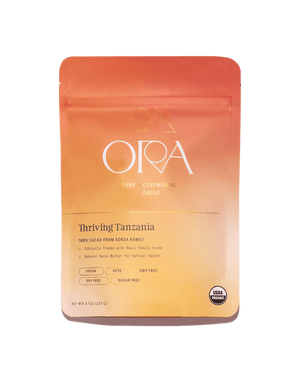
Ceremonial cacao should be much better than most people's experience of 100% cacao which is baking chocolate, typically very dry and rather burnt. The taste varies meaningfully by origin: Ora Cacao's Boundless Belize is nutty and smooth, Connected Colombia is bright and slightly grassy, Glowing Guatemala is deep and earthy, Thriving Tanzania has notes of red fruit, and Uplifting Uganda is bold and robust.
Prepared as a warm drink with hot water, ceremonial cacao becomes velvety and full-bodied. Many people find the natural bitterness grounding and satisfying. You can customize with a natural sweetener, plant milk, cinnamon, cayenne, or cardamom — or drink it pure and let the cacao speak for itself.
7. What Are The Benefits Of Ceremonial Cacao?
The top four benefits of ceremonial cacao are:
1) It gently energizes without a crash with theobromine
2) It is an excellent source of flavonoids which support cardiovascular health
3) It boost mood and calms the nervous system with numerous neuro-modulators
4) It remineralizes the body with magnesium, potassium, calcium, iron, and many other trace minerals.
When the body and mind are nourished in all of the above ways, creative flow state can occur.
Ora Cacao runs our own chocolate factory and we've lab tested our products to validate that our low temperature process keeps over 80% of the original flavonoids compounds present in raw cacao beans intact in our finished ceremonial cacao. Our testing shows that Boundless Belize contains 764mg flavonoids per serving, and Thriving Tanzania contains 674mg flavonoids per serving. These are notably high compared to conventional chocolate bars, and are similar to daily dosages used in studies for verifying health benefits from flavonoids.
Cacao creates a gentle, uplifting shift in your body and in your mood. There is substantial science that explains why ceremonial cacao is so beneficial. Pure cacao contains beneficial neurotransmitters and neuro-modulators already present in our brain. It also contains re-uptake inhibitors that block the pathways that our bodies normally use to break down and recycle these beneficial mood altering molecules, so the good mood lasts for longer. In the long term, regularly working with ceremonial cacao can have therapeutic health benefits, including creating new neural pathways that change daily experience to include feeling expansive, blissful, connected to self and/or others, inspired, and connected to your intuition & vision.
You may also notice: increased presence and mental clarity, feeling relaxed and grounded in your body (thanks to high magnesium content), and a softening or “opening” of the heart, making it easier to connect, reflect, or create. Cacao invites a more balanced, connected state—where you feel awake, centered, and in tune with yourself.
8. Does Ceremonial Cacao Help with Depression?
Many people use ceremonial cacao during emotionally difficult seasons — grief, burnout, low mood, or a quiet sense of disconnection from themselves. And many of them report that cacao becomes a meaningful part of how they navigate those periods. Ceremonial cacao is not a clinical treatment for depressive disorders, and we don't make that claim. What many people do experience is a daily ritual with cacao that helps them feel more joy, love, and connection.
There is real science behind this. Ceremonial cacao contains several compounds that directly support mood: anandamide (associated with bliss and emotional ease), tryptophan and tyrosine (amino acid precursors that the body converts into serotonin and dopamine), and natural MAO inhibitors that slow the breakdown of these molecules — meaning the good mood lasts longer than it otherwise would. These aren't pharmaceutical-grade interventions, but they actually operate on many of the same neuro-chemical pathways and are measurable.
Beyond the chemistry, there's something about the ritual itself. Slowing down, warming your hands around a mug, setting an intention — these acts of presence have their own therapeutic value, separate from what's in the cacao. Many people find that a daily cacao practice becomes a reliable anchor during periods of low mood, not because cacao fixes anything, but because it offers a moment of warmth, presence, and return to the self.
Ora Cacao's founder Jonas has written about experiencing states of elevated consciousness and emotional openness after over a decade of regular cacao practice — changes he attributes in part to cacao's capacity to reinforce neural pathways associated with joy, connection, and presence over time.
If you are experiencing clinical depression, please work with a healthcare provider. And if you're taking SSRIs or antidepressants, see our FAQ on drug interactions before drinking cacao — the combination requires medical guidance.
What cacao can be is a gentle, grounding ally on hard days — and for many people, that turns out to be quietly life-changing.
9. Does Ceremonial Cacao Help With Anxiety?
Ceremonial cacao is not a clinical treatment for anxiety disorders, and we don't make that claim. What many people do experience is a daily ritual with cacao that helps them feel more present, grounded, and less reactive to stress — which is meaningfully different from pharmaceutical intervention but no less real.
Magnesium, found in high concentrations in whole cacao, is a natural muscle relaxant and plays a key role in nervous system regulation, yet many people are chronically deficient in it. Theobromine, cacao's primary stimulant, gently increases blood flow without activating the central nervous system the way caffeine does, making it far less likely to provoke jitteriness or racing thoughts. Anandamide — the "bliss molecule" — and cacao's serotonin precursors further support a grounded, open emotional state.
Compared to coffee, ceremonial cacao creates a sense of calm focus and emotional ease along with steady energy. This is noticeably different from the energy, cortisol spike, and associated anxiety, irritability, and crash that coffee can induce.
One note: if your anxiety is tied to caffeine sensitivity, start with a half dose of cacao to see how your body responds. And if you take SSRIs or anti-anxiety medications, see our FAQ on pharmaceutical interactions before starting.
10. How Do You Make Ceremonial Cacao?
Prepare your ceremonial cacao by adding about 0.8 to 1.0 oz (23-28 grams) of cacao into a blender with 6oz of hot water or non-dairy milk (~180°F) and blend for 15 seconds until creamy. You can add natural sweetener like honey or maple syrup to taste. Pour into your favorite mug and enjoy!
Ingredients:
0.8 to 1.0 oz ceremonial cacao (23-28 grams)
6oz water or non-dairy milk
1-2 tsp sweetener of your choice, optional
Instructions:
Heat your water to 180 degrees. Like green tea, using boiling water with our cacao could heat out all the powerful nutrients. We like using electric kettles with temperature control or you can boil the water and let it cool down for a few minutes.
Select your dosage with intention. Cacao can be stimulating, we recommend one serving for this recipe but everyone's body is different - you can always start with half of this recipe and see how your body responds.
Make it creamy! Place the cacao in a blender, pour in 6 oz of heated water or plant-based milk per serving and gently blend to create a nice frothy drink. You can also use a hand-held electric milk frother for less cleanup.
*Bonus tip! The cacao tastes better when you pause and set an intention for your day before taking your first sip.
11. How much ceremonial cacao should I drink?
A regular daily dosage of cacao is considered to be 0.8oz-1.0oz (23g-28g). This is safe to drink on a regular daily basis and provides all the energizing, cardiac and mood benefits of ceremonial cacao. You can easily halve this amount, or even have up to 1.5oz (42g) in a sitting, as people are very different in their sensitivity to cacao and how much they want to drink. We encourage you to experiment to find what feels right in your body, as there is no "right" amount. While ceremonial cacao is completely safe, we do recommend making sure that you are well hydrated. And if you take SSRIs, SNRIs, or similar pharmaceuticals, consult your doctor before drinking more than a half dose of cacao, as cacao's natural MAO inhibitors can interact with these medications.
12. When Is the Best Time to Drink Ceremonial Cacao?
Most people find morning is the ideal time to drink ceremonial cacao. The gentle energy lift from theobromine peaks within 1–2 hours and sustains for several hours without a crash, making it well-suited to morning work, creativity, or meditation. You can replace coffee completely with ceremonial cacao, or rather than drink a second cup of coffee later in the day, you can drink a cup of ceremonial cacao. Starting the day with an intentional ritual sets a different tone than grabbing a quick cup of coffee.
Most people can drink ceremonial cacao on an empty stomach. The high cacao butter content - roughly 50% of the cacao - naturally protects the stomach and slows stimulant absorption, which is part of why the energy feels smooth rather than sharp. If you're new to cacao or have a sensitive digestive system, a small snack beforehand is fine, but most people find it unnecessary. Generally we recommend against having ceremonial cacao with a meal, as it will mute the effects, and it decreases the attention on just the experience of the cacao itself.
You can also drink cacao later in the day, for example as an early afternoon pick me up. However it's important to know that theobromine has a half-life of roughly 6–10 hours in the body, substantially longer than caffeine's. A full ceremonial dose in the afternoon can linger into the evening and affect sleep quality for sensitive people. If you want cacao later in the day — for an afternoon focus session or creative work — try a half dose and see how your body responds. Some people have no issue; some people even have a few nibbles of cacao just before bed, while others are very sensitive and need to stick to earlier in the day.
As a general guide: morning for a full dose of cacao, early afternoon for a lighter half dose, and give yourself at least 6 hours before bed unless you are very active in the evening, for example you are out socializing and dancing.
13. How should ceremonial cacao be stored?
Store ceremonial cacao in a cool, dry place away from direct sunlight — a pantry or kitchen cupboard works perfectly. Refrigeration is not necessary and can introduce moisture, which can negatively impact shelf life or which may cause the cacao to bloom (a harmless white appearance caused by cacao butter migration). Properly stored, ceremonial cacao keeps for at least two years, although the cacao doesn't expire at this point, there is no food safety risk to even older 100% cacao. Do keep cacao away from strong-smelling foods, as it absorbs odors, and once you've opened a bag, reseal it tightly or transfer to an airtight container to preserve freshness.
Once cacao is prepared as a drink, consume immediately, or within no longer than 24-48 hours if kept refrigerated.
14. What Is the Difference Between Ceremonial Cacao and Hot Chocolate?
The ingredients, nutrition, intention, and effect of ceremonial cacao and hot chocolate are substantially different, and as a result these should be considered fundamentally different products.
Ingredients: Hot chocolate is typically made from dutched cocoa powder (heavily processed, defatted cacao), sugar, powdered milk, and emulsifiers or thickeners. Ceremonial cacao is made from just single ingredient — whole cacao beans, which are blended in hot water, with optional light sweetener and superfoods.
Nutrition: Because cocoa powder is defatted and processed at high heat, most of the bioactive compounds in the original cacao bean have been destroyed or removed by the time they reach your mug. Ceremonial cacao retains its full spectrum of flavonoids, neuro-modulators, theobromine, minerals, and healthy cacao butter. They are not at all nutritionally equivalent.
Taste: Hot chocolate is sweet, mild, and smooth — designed to taste like dessert. Ceremonial cacao is naturally bitter, earthy, and rich, with complex origin-specific flavor notes. Some people add a touch of natural sweetener, but the depth of flavor in quality ceremonial cacao stands on its own in a way cocoa powder cannot.
Intention: Hot chocolate is a comfort drink. Ceremonial cacao is a functional food — something you drink with awareness, ideally as part of a morning ritual or intentional practice. The effects (sustained energy, mood lift, heart opening) are real and noticeable in a way that a mug of hot chocolate simply is not.
15. Is Ceremonial Cacao A Good Alternative To Coffee?
Many people drink cacao as an alternative to coffee because cacao provides gentle, sustained energy, without the jitters and crash of coffee. Some people replace coffee completely with ceremonial cacao, while other partially replace it, drinking cacao instead of coffee some days of the week, or rather than drinking a second cup of coffee later in the day, they drink a cup of ceremonial cacao instead.
What sets cacao and coffee apart are their main stimulants: coffee contains caffeine, while cacao contains theobromine. Although they are similar compounds, how they function in the body is vastly different.
One of the main differences between theobromine and caffeine is that caffeine stimulates the central nervous system (causing jitters, anxiety, etc.) and theobromine stimulates the cardiovascular system, increasing blood flow and alertness. Theobromine is also gentler and keeps you energized for longer periods of time.
Note: Ora Cacao contains 36mg caffeine and 212mg theobromine per 1oz serving. This makes theobromine by far the dominant stimulant and the many other compounds in cacao moderate the little caffeine that is present. Many people sensitive to caffeine report having no issue drinking cacao.
16. Does Ceremonial Cacao Have Caffeine?
Ora cacao has 36 mg of caffeine per 1 oz serving, or about 1/3 of what a regular cup of coffee has. It sounds like a lot, but 1mg of caffeine in cacao is not equivalent to 1mg of caffeine in coffee, because cacao has many other compounds that balance and down-regulate the caffeine. One of these key compounds is cacao butter, which is 50% of the cacao itself. This healthy natural fat slows down the absorption of caffeine into your body (very similar to a bullet proof coffee). You might think that caffeine is the primary energizing molecule in cacao, but it's actually theobromine, which is present in much larger quantities.
The caffeine in cacao is substantially down-regulated, so that truly theobromine is the dominant effect and this makes cacao suitable even for caffeine sensitive people.
17. What is theobromine and how is it different from caffeine?
Theobromine is a mild stimulant found in high concentrations in cacao. It's in the same chemical family as caffeine but acts very differently in the body. Caffeine is a fast-acting central nervous system stimulant — it spikes energy quickly and can trigger jitteriness, elevated cortisol, and a crash. Theobromine has a slower onset, longer duration, and a gentler effect, primarily on the cardiac system: it dilates blood vessels, increases blood flow throughout the body, and produces a warm, sustained sense of alertness without the cortisol spike caffeine causes. This is why many people find cacao gives more stable, grounded energy than coffee.
In addition to its stimulant properties mentioned above, theobromine is also a vasodilator (it relaxes blood vessels), so it has a neutral effect on blood pressure. The improved circulation from cacao is excellent for cardiac health, and improves absorption of the nutrients in cacao and superfoods that it is paired with.
Ora Cacao has 212mg theobromine per 1oz serving.
18. Is Ceremonial Cacao Safe To Drink Every Day?
Ceremonial cacao that is high quality and intentionally sourced is safe and in fact beneficial to drink every day. See our other FAQ on benefits of ceremonial cacao.
Primary concerns for safety include heavy metal content and mold toxins, which we will address below. Populations that should take extra care with cacao are pregnant women and people taking pharmaceutical medications for depression or anxiety. See our other FAQs on these topics.
Cacao can contain trace amounts of heavy metals such as lead, which is a post-harvest contaminant, and cadmium, which is absorbed from the soil. There are well established limits to protect from long term accumulation.
What matters most is quality and sourcing:
- Rigorous testing matters: Well-sourced cacao that is regularly lab-tested can fall well within established safety guidelines.
- Not all cacao is the same: Studies show heavy metal levels vary widely by region, farming practices, and processing methods.
- Moderation + quality = safety: Daily consumption of tested cacao that falls within the safety limits is totally fine.
Drinking cacao daily can be a nourishing and sustainable ritual. Ora Cacao is transparently sourced, USDA organic certified, and tested for heavy metals and mold toxins.
19. Does ceremonial cacao contain heavy metals?
All ceremonial cacao, and many common whole foods including potatoes, rice, bread, spinach, and grains, contain trace amounts of heavy metals if you test with high enough resolution.
Lead is a post-harvest contaminant, due to airborne and ground based lead dust that is prevalent in many cacao growing regions, mainly from leaded fuel combustion and to a lesser extend from leaded paints.
Ora Cacao's pure cacaos test exceptionally low for lead. Our Boundless Belize tests below 5ppb, Thriving Tanzania at 7ppb, and Illuminating India at 11ppb — all levels so low they sit at the threshold of what modern labs for food testing will detect. For context, California's legal framework (which is more stringent than federal standards) allows up to 225ppb lead in cacao products. We achieve these low values through remote sourcing and strict post-harvest protocols.
Cadmium is in soils is both naturally occurring but also contributed to by phosphate fertilizers which are used worldwide, even for organic crops. Uptake of cadmium into cacao trees is mediated by numerous factors such as soil health, tree age, and cacao genotype. Remediation of soils to reduce cadmium levels is likely to be a multi-generational effort.
What matters with cadmium is daily exposure, not just concentration. One serving of Ora Cacao delivers comparable cadmium to a serving of potatoes, rice, or bread. Cacao has a higher concentration than many foods, but you consume far less of it, so total daily exposure is modest and comparable to everyday staple foods.
The good news is that essential minerals naturally reduce cadmium absorption in the body — and ceremonial cacao itself contains significant levels of iron, zinc, selenium, and magnesium, which are precisely the minerals that protect against heavy metal uptake. Cacao has built-in protection against the same heavy metals it contains.
Ora Cacao has conducted third-party lab tested for heavy metals for over 10 years. Our most current lab results, conducted by Purity Labs, are published in full on our Heavy Metals Results page. All of our levels are within FDA guidelines.
If you have a known heavy metals sensitivity, Thriving Tanzania is our lowest-metals recommendation (7ppb lead, 105ppb cadmium). Illuminating India is also recommended (11ppb lead, 125ppb), as it also exhibits very low cadmium levels for cacao.
20. Is ceremonial cacao safe during pregnancy?
Ceremonial cacao can be a beautiful ally for pregnancy and postpartum. We absolutely recommend consulting your healthcare provider before working with cacao during pregnancy to find out what is safe for your body. If you are new to cacao, we recommend waiting until the 2nd trimester to start a practice with cacao. And then when you begin with cacao, we recommend 1/4 to 1/2 of a normal daily dose (0.8–1.0oz), so approximately 0.2–0.5oz.
If you already have a cacao practice you can decrease your normal dose by half and see how it feels for the first trimester, and then slowly increase throughout the last two trimesters. Ora Cacao is third-party tested for heavy metals and is USDA Organic. When in doubt, your doctor's guidance takes priority.
21. Can ceremonial cacao be taken with antidepressants or SSRIs?
Ceremonial cacao contains natural MAO inhibitors (MAOIs), which slow the breakdown of serotonin and dopamine in the body. This is part of what makes cacao's mood effects noticeable, by keeping these beneficial molecules in the brain for longer, but it also means that combining cacao with pharmaceuticals could amplify serotonin activity beyond intended levels, even potentially resulting in serotonin syndrome. If you take SSRIs, SNRIs, or any MAOI-based medication, please consult your doctor before drinking ceremonial doses of cacao. At half dosages of cacao (under 0.4-0.5oz), the interaction risk is lower, but medical guidance is always recommended as a very bad headache could result. We hope that someday clinical research will establish a protocol for cacao as a complement or alternative to pharmaceuticals for depression treatment — until then, caution is warranted. We do know folks who have reduced antidepressants by working with cacao but everyone's body is substantially different so consult your healthcare provider and start with very small amounts if you decide it is right for you.